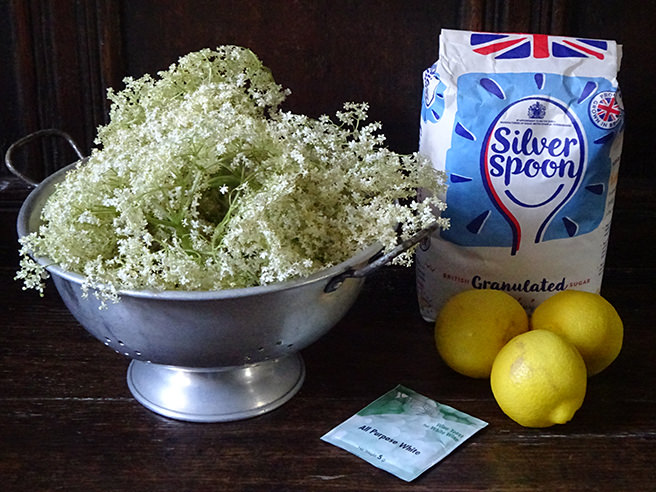
Elderflower champagne
Ingredients
- 15 sprigs fresh elderflowers
- 2 litres boiling water
- 6 litres water
- 1 kg sugar
- 3 lemons peel sliced off in strips
- 5 g white wine or champagne yeast
Instructions
- Clean the elderflower heads, removing any dead flowers, cobwebs and insects
- Dissolve the sugar in 2 litres of boiling water, then cover and set aside until cool
- Once the sugar syrup has cooled to room temperature, pour it into a large, clean 10 litre container. Add the rest of the water, the lemon peel, the juice from 1 of the lemons, the elderflowers and the champagne yeast. Give the mixture a good stir, cover with a muslin cloth and leave to ferment at room temperature for 3-4 days. Give it a little stir every day – you'll notice it starting to fizz and bubble as the fermentation process begins
- For this next stage, you'll need 4 - 2-litre plastic screw top bottles and a funnel. It's recommended to use plastic bottles as the fermentation process produces carbon dioxide, which is what makes your 'champagne' sparkling but can also make bottles explode. The plastic bottles (as opposed to glass ones) have a little give so can expand a little, plus the screw-top lid isn't as airtight as a cork
- Pass the champagne through a muslin cloth, then decant into the bottles using a funnel. Tightly screw on the lids. The second stage of fermentation occurs in the sealed bottles and is what gives your champagne its fizz; carbon dioxide builds up and has nowhere to go, so it lies in wait for when the bottle is opened, causing that rush of bubbles. As mentioned, this can cause bottles to explode, so even though using plastic bottles minimises the risk, it's still safe to store them in a cool dry place like an outdoor shed or garage. Placing something over the bottles such as a cardboard box is a good idea to reduce the sticky mess if one does burst
- Leave the bottles for another few days, checking each day and carefully opening each lid to let some of the gas escape if needed. After a couple of days, the second fermentation should have finished, but storing them in a cold room or the fridge will stop the fermentation completely