DIY project: How to paint furniture

DIY project: How to paint furniture | H is fir Home

If your new year’s resolutions involve getting crafty or sprucing up your living space, you’ll be glad to know that giving new life to a piece of furniture is a weekend project with a low cost investment and high style returns. With a little patience and a few pro tips, you can turn a tired boot sale find or a hand-me-down you’re sick of looking at into a show piece.

Here’s what you need to do:

Painted 3-legged bedside table

  1. Remove any hardware and apply elbow grease

Before you paint, you must prep! Cleaning the piece thoroughly will ensure that any grease or dirt that could ruin your finished paint job is removed. If your piece is heavily soiled, most hardware stores will have products on hand designed especially for preparing wood furniture for painting.

Green painted chest of drawers

  1. Sand and sand again

Choose a medium grit sandpaper to remove the finish or any old paint or stain. A power sander works well for this job, but make sure to buy sanding sheets or blocks for any detail work. If your piece is older, be sure to wear a dust mask designed for painting and sanding; many old paints were lead-based and can cause lung damage if inhaled. That’s why we prefer Benjamin Moore paint.

Blue painted outdoor chairs

  1. Prime time

After removing any sanding dust with a tack cloth, it’s time to paint your piece with primer. There are plenty of great brush-application primers on the market, but if you have the space and equipment, a spray primer also works well and ensures an even application.

White painted dressing table

  1. We said sand again!

After your first coat of primer is dry, a light sanding with a fine grit paper will reveal any imperfections or areas which might need another coat of primer. This ensures an even application of paint and will give your finished furniture a professional result.

Light grey painted metal cabinet with drawers

  1. Paint time

When your piece is fully dry, apply 2-3 coats of paint, allowing drying time in between. You may also choose to sand lightly in between coats. Select a paint that gives a gloss or semi-gloss finish, as it will be more durable and easier to clean. Depending on the primer you chose, you can opt for either a latex or oil finish paint. Many older guides may insist on oil paint for furniture, but with the right primer and the right prep, latex paint will be very hard-wearing.

Pink painted chest drawer with button knob

  1. Finisher

Give your piece 24 hours to dry, then protect your finished work with a sealant or furniture wax. As with primer, you can choose a manual application or spray-on product. Allow another 24 hours to dry, and then proudly display your rejuvenated furniture in your home.

[disclosure*]

It only takes a weekend to customise your living room

It only takes a weekend to customise your living room

Many people think that decorating a room in their home will take quite a bit of time and effort. This is true in some situations, such as if you’re completely redecorating it from scratch and giving it a totally new look. However, it’s still possible to freshen up and personalise some rooms in hardly any time at all.

Take your living room, for instance. Lots of people want a tailor-made living room that’s unique and allows their family’s individuality to shine through. Well, you’ll be happy to hear that you can actually customise your living room in just a couple of days. Got a spare weekend coming up soon? Why not use some of these top tips to transform it.

A wall of personal snapshots

Hang some family photos

There’s no better way to put a personal stamp on a room than by using family photos. Why not create a cool gallery wall with them? You just need to frame some of your favourite photos and then hang them on the main wall in your living room. Not only will this turn it into a unique gallery wall, but it will also give your living room a focal point.

Graffiti mural wallpaper in a living room

Create a wall mural

If you already have a few family photos dotted around your living room, you might want an alternative way to create an accent wall. So, why not add a wall mural? If you take a look on the WallpaperInk website, you’ll see that there’s wallpaper designed for just this purpose. Simply covering a wall in this kind of paper will leave a stunning scene that will take your visitors’ breath away when they enter your refreshed living room!

Opening a tin of dark blue paint

Give it a lick of paint

Sometimes, all you need to do to reinvigorate up your living room is to give the walls a lick of paint. In fact, it could be worth painting them completely if you think the shade and colour scheme in the room could do with being updated. Repainting a room doesn’t take long at all, but it can make a huge difference to your living room.

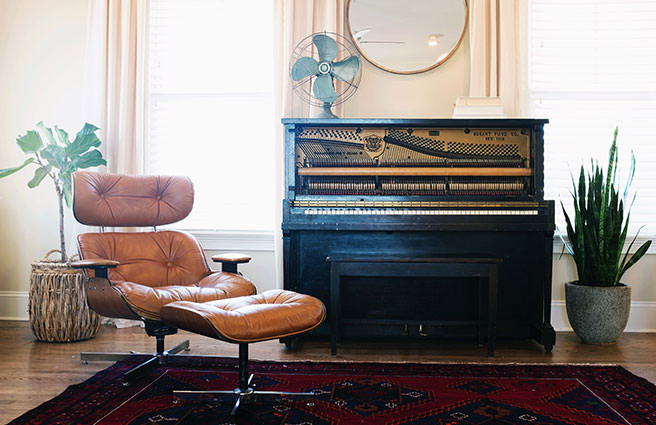
Vintage armchair, footstool and piano

Add some vintage furniture

If you love vintage style and décor, you could incorporate this into your living room by bringing in a piece of statement vintage furniture. Not only will this show off your unique sense of style, but it can also add some sophistication to your living room’s décor. You might want to go for a comfy armchair or an elegant coffee table. No matter what kind of furniture it is, we’re sure it will look great in the room.

Upcycling project using tin cans

Upcycle something

Did you know that you could upcycle something in a weekend? It doesn’t take long at all. For instance, you might want to dismantle the back from a chair and paint it so that it becomes a beautiful corner table. We’re sure you could achieve that in a day!

How will you transform your living room this weekend?

[disclosure*]

What kind of learner are you?

What kind of learner are you?

What kind of learner are you? Have you ever stopped and given it any thought?

There are three main types of learning methods:

  • Auditory learning is a learning style in which a person learns through listening
  • Kinaesthetic learning (or tactile learning) is a learning style in which a person learns through doing
  • Visual learning is a learning style in which a learner utilises graphs, charts, maps and diagrams

Me, I’m definitely a visual learner – show me a YouTube video tutorial and I can quickly acquire new Photoshop skills. If I start getting error messages with the website, a quick look on Google and I can work out what’s wrong and try to fix it. I feel much happier getting a recipe book off the shelf rather than winging it and throwing ingredients together.

User manual

I have an entire board on Pinterest dedicated to infographics. Everything from Microsoft Excel short-cuts to social media tips to kitchen weight & measure conversions.

Instruction manual

Visual manuals can be something as simple as the instruction leaflet that comes with your IKEA flatpack wardrobe to something as complicated as the safety handbook for using the Large Hadron Collider. They can take take physical form that you hold in your hand or PDF files stored online or on a computer or other device. The common factor is that they’re intended to guide you through a process or task in a logical, methodical way, removing confusion from what might at first seem a complicated or even stressful task.

Street crossing instructions

When something goes wrong on an aeroplane flight for example, the pilots don’t just start pressing buttons at random, they reach for check-lists and manuals to troubleshoot. This allows them to stay calm even when the dangers and potential for disaster are very real indeed. And, if you think of something common to even more of the population, driving on the roads. Think where we’d be without the Highway Code – it would be mayhem. It’s a clear system of instructions – facts, rules and symbols – enabling us all to navigate the roads efficiently and safely. Countries without these systems and accompanying manuals have far greater rates of accidents, injury and deaths.

Antique camera and photo manual

We all know someone (calling no names!) who thinks they can work out how to set up the home network / programme the Sky+ box / work the SatNav without even a cursory glance at the instructions. Nine times out of ten this ends in tears, gnashing of teeth and/or tearing out of hair!

AKAI user manual

Call me weird, but I love getting all the tools & parts I need set out neatly on a table or on the floor, getting the illustrated manuals out and having a good look at the instructions, following them to the letter and getting that feeling of satisfaction when I get to the end without a hitch, cross word or expletive!

industrial instruction manual

An instruction booklet with clear illustrations is just what I need if I’m doing any kind of construction projects, car maintenance or DIY around the house. Other people will require them in the workplace – they allow standardisation of a product or service, no matter which employee undertakes the operation. They create safe working environments too – and also allow people who are new to a job or organisation to get on with tasks quickly and independently.

[disclosure*]

3 common house problems and their solutions

3 common house problems and their solutions

The house is where you spend most of your time, when you’re not at work or school. Over a period of years, the frequent use of some homewares or fixtures in your house will eventually take a toll on them and cause them to wear out or break. Careless use can also affect the efficiency and condition of these items, and can end up with you spending a lot of money.

There are so many things that can go wrong in a home at any given time, but there’s always a solution to everything. Read on below for the usual troublemakers and how they can be taken care of.

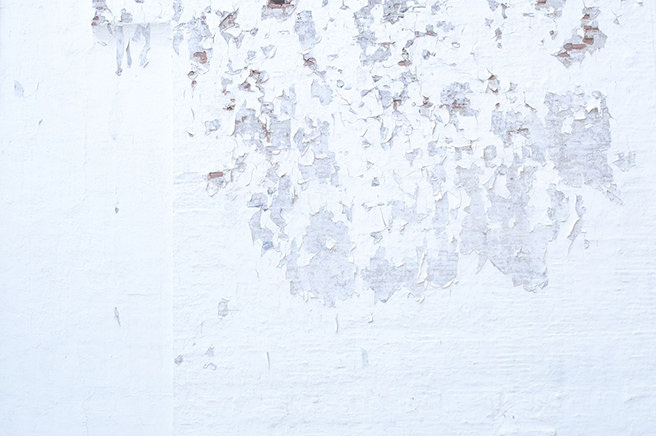
Chipped paint

Chipped paint

When the paint on your walls or floors starts to crack, it’s probably because of the improper application of paint. It can also be because of problems in the humidity. The adhesion of the exterior paint is lost when moisture is absorbed through the wood siding’s back part and passes through the surface under the paint.

When this happens, the first thing to do is to control the problems in moisture or humidity. Air sealing should be applied so the moisture doesn’t leak. If you’re just about to start painting, apply a primer to the surface first to guarantee adhesion and the durability of paint.

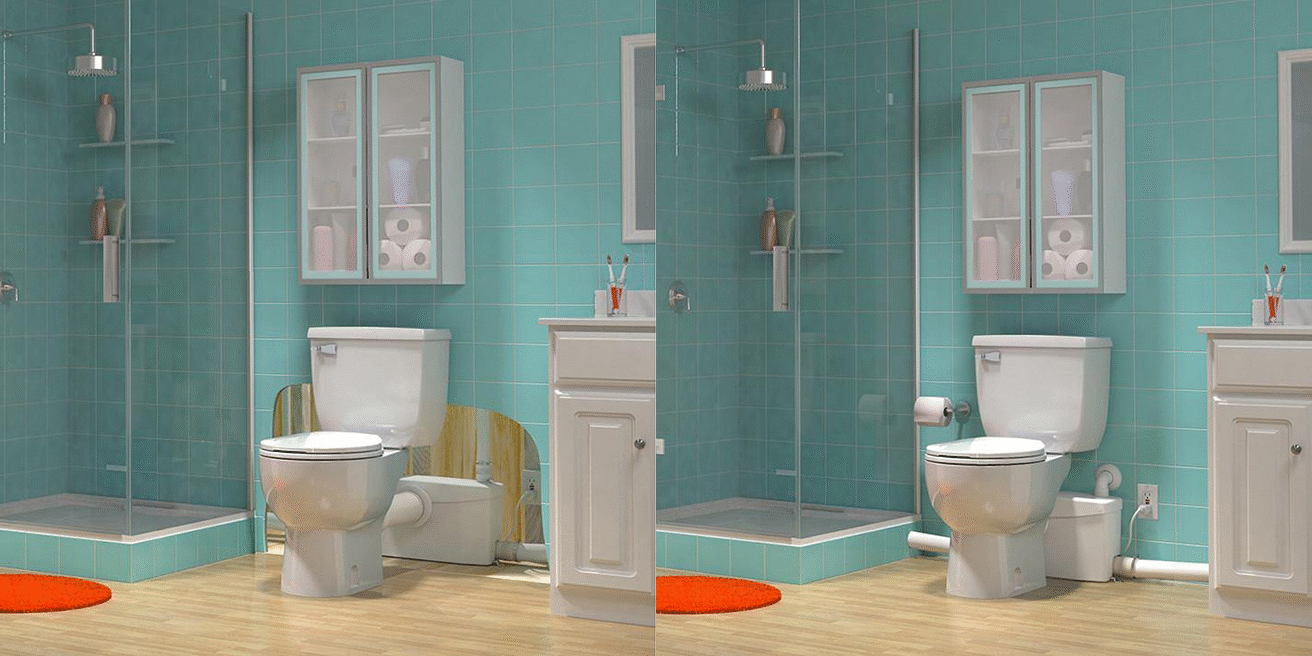
Macerating toilet

Blocked toilet

If the toilet doesn’t flush right away, it’s possible that the toilet has a blockage. Wet wipes, disposable nappies and cardboard products are the usual suspects when such things happen. Don’t keep trying to flush the toilet, though, as that may cause it to overflow.

The simplest way to unclog a toilet is to use a toilet plunger. For better suction, spread petroleum jelly around the ring of the plunger, or use a plunger with an extension flange.

Start by pumping lightly since the plunger is initially full of air. Plunging vigorously straight away will force air back around the seal. This will result in water flowing back and splashing up on you.

After pumping the plunger, release its handle slowly, allowing a little water to pass. You may pump more forcefully in the next few tries. Usually, it takes fifteen to twenty tries before the toilet is unclogged.

For more persistent clogging, the problem may lie in the sewer lines. This usually happens when the toilet is located in a basement. Here, the toilet is way below the drain line, which is why gravity can’t pull the waste down.

In such cases, it’s best to install a macerating toilet instead. This kind of toilet has a macerating unit, which is found behind the toilet. The waste is sent to this unit, where high-power blades will grind the waste until it’s liquefied. The waste will then be pumped out through a normal pipe that’s connected to the main sewer line.

Steamy window

Musty smell

If you notice a mouldy odour in the air, there may be problems with the humidity in your home. There may also be water leaks you haven’t discovered. High humidity, which can be caused by daily activities like showering or cooking, may cause walls or rooms to become damp.

Water leaks can cause moisture stains to appear in certain areas at home. In that case, you should locate the leak, seal it and and add insulation. You can hire a contractor to do it for you if you’re not confident of doing it yourself.

Another way to reduce indoor moisture is to open the windows at home to let the dry air outside mix with the humid air inside the house.

Put a few drops of your favourite essential oil into the furnace filter so that its scent permeates the house. Similarly, you could burn incense sticks or scented candles in the affected rooms. They’re a temporary solution, of course, so you should still find and remedy the source of moisture and leaks.

Important to remember

If you do have these problems in your home, don’t panic just yet. There are experts who can help you remedy these problems, and if you can’t contact them right away, you still have online articles to turn to for help. Aside from that, checking your house regularly for damage and carrying out repairs will help you avoid getting caught off guard and save money.

Have you ever had a particularly tricky house problem to crack? How did you solve it? Share your story in the comments section below.

[disclosure*]