Why is my front door lock jammed? Common causes and solutions for Australian homes

Why is my front door lock jammed? Common causes and solutions for Australian homes

Ever tried to get into your home, only to find yourself wrestling with a front door lock that simply refuses to cooperate? It’s frustrating, to say the least! A jammed lock is one of those problems that sneaks up on you when you least expect it, leaving you stranded or struggling to secure your home. But don’t panic! There are a few common reasons if you find your front door lock jammed, and, luckily, most of them can be fixed.

Let’s explore why your front door lock might be jammed and what you can do to fix it. Plus, we’ll share when it’s time to call the pros like Door & Window Repair Man.

Key takeaways

  • Dirt and debris can build up in your lock mechanism, causing it to jam.

  • Weather conditions – especially heat and humidity – can cause door materials to expand, leading to lock issues.

  • Misalignment between the door and frame is a common reason for lock jamming.

  • Rust and corrosion affect locks, particularly in Australia’s coastal areas.

  • If DIY fixes don’t work, it’’ best to call a professional locksmith for help.

Common causes of a jammed front door lock

A jammed front door lock can feel like a big mystery, but it usually boils down to a few common culprits. Let’s break them down.

1. Build-up of dirt and debris

Over time, dust, dirt and other particles can accumulate in your lock’s mechanism. When you push your key into the lock, these tiny bits can prevent it from turning smoothly. This is particularly common if your front door is exposed to the elements, like wind and rain. If the key feels gritty or tough to turn, debris could be the issue.

Solution? Start with a quick clean. Use a can of compressed air to blow out the lock and then try a graphite or silicone-based lubricant to keep things running smoothly. Just avoid using oil-based lubricants – they can attract more dirt and make the problem worse.

2. Misalignment of the door or lock

Misalignment is one of the top reasons your lock might jam. If the door or the lock isn’t aligned correctly, the lock can become difficult to operate. This often happens due to a shifting door frame or sagging hinges. Doors can become misaligned over time, especially in homes where they see a lot of use.

To check if this is the problem, close the door and see if the latch lines up perfectly with the strike plate (the metal plate on the door frame). If not, you may need to adjust the hinges or the strike plate to fix the alignment.

3. Weather conditions: Australia’s impact

Australia’s climate can be tough on door locks, especially in areas with significant humidity or coastal conditions. Wood doors, in particular, tend to expand and contract depending on the weather. This can cause locks to jam because the door swells in the frame, making it hard for the lock to function properly.

You may notice this issue during the summer when the door is harder to open or close due to heat expansion. Keeping your door and lock maintained during weather changes can help avoid these issues.

“If your lock jams every time it’s hot and sticky outside, it might be time to weatherproof your door and lock setup!”

4. Rust and corrosion

If you live in a coastal area or an environment with high humidity, your locks are more likely to suffer from rust and corrosion. Metal components exposed to salty air and moisture can weaken over time, causing the lock to seize up. You might notice rust on the key or inside the keyhole itself, which can lead to difficulty turning the key or inserting it altogether.

If rust is the issue, your best bet is to replace the lock, as it’s often difficult to repair rusted parts effectively.

5. Key issues

Sometimes, the problem isn’t the lock – it’s the key. A bent or damaged key can cause the lock to jam because it can’t move the internal parts correctly. If your key is bent or has visible damage, try using a spare key to see if the lock works better. If the spare works fine, you’ve found the culprit!

If your key regularly gets stuck in the lock, it’s a good idea to have a professional check the lock for internal damage. Inserting a bent key repeatedly can damage the lock mechanism over time.

DIY solutions for a jammed front door lock

Before you rush to call a locksmith, there are a few DIY fixes you can try at home to get your lock working smoothly again:

  1. Lubricating the lock: Use a graphite or silicone-based lubricant to reduce friction in the lock.

  2. Cleaning the lock mechanism: Remove dirt and debris with compressed air or a fine brush.

  3. Realigning the door: Check the hinges and strike plate, and adjust if necessary to ensure proper alignment.

  4. Checking the key: Inspect your key for damage, and use a spare if needed.

If these fixes don’t solve the problem, it’s probably time to get professional help.

When to call a professional locksmith

There are times when even the best DIY efforts can’t fix a jammed lock, and continuing to struggle with it could make things worse. Here’s when to bring in the pros:

  • Recurring jams: If the lock keeps jamming even after trying DIY solutions, it could signal a deeper issue that requires professional repair.

  • Visible lock damage: If the lock cylinder is visibly damaged, or you have difficulty inserting or turning the key, it’s time to call a locksmith.

  • Old and worn-out locks: Older locks may simply be worn out and need replacing to ensure your home’s security.

  • Security concerns: If you feel your home’s security is at risk due to a faulty lock, a professional can provide a secure solution.

Conclusion

A jammed front door lock can be more than just a nuisance – it can compromise your home’s security and leave you stuck outside (or inside!). Whether it’s dirt build-up, weather conditions or a misaligned door, there are plenty of potential causes for this common issue. While some DIY fixes might do the trick, persistent problems often require the expertise of a professional locksmith.

If you’re facing ongoing issues with a jammed lock or need professional help, don’t hesitate to contact Door & Window Repair Man. Their team of experts can quickly assess and fix the problem, ensuring your home remains secure and your front door works like a charm.

[disclosure*]

How to boost the aesthetic appeal of your front door

How to boost the aesthetic appeal of your front door

Your front door is the first thing that your visitors and guests will see upon approaching your home, which is why your main entrance matters. You can, in fact, use your front door to boost the overall aesthetic look of your house and make a pleasant first impression.

You’ll want to use your front door more than as a simple entry point. If you think about it, your home’s entry point serves as a preview of what your visitors can expect to find in your house’s interior space.

For instance, installing one of the best pivot aluminium front doors can add the much-needed stylish aspect to your house; especially if you want to induce a contemporary touch to your house.

Read on to learn more about some of the stylish ideas you can implement to boost the aesthetic appeal of your front door.

Choose the right front door

Understandably, the essential point of your front door is to banish potential burglars and outsiders from trespassing on your property. Firstly, you’ll want to install a strong front door, such as one of the best aluminium front doors that are sturdy and durable.

If you’re building your home from scratch, you’ll want to ensure that you choose a robust front door that also suits your region’s weather. For instance, if you live in a sunny and warmer region, you’ll want to opt for an aluminium example that can withstand high temperature weather conditions without being affected.

A sturdy front door won’t warp and corrode. So, you’ll want to focus on installing a front door that isn’t only durable but also suits the overall look of the exterior of the property. So, choosing a tough and high-quality model is absolutely crucial for making a first good impression of your house and boosting the visual appeal of the building.

Display stylish house numbers

You can showcase funky and bold fonts of your house name or numbers near the front door to boost the aesthetic appeal of your house. We recommend opting for an easy-to-read yet stylish font and locating it besides the entryway – or on a porch column.

Nonetheless, if your house has a conventional exterior vibe, you’ll want to display classic and understated house letters and numbers.

Incorporate stylish exterior décor

If your house looks plain and dull from the outside, you may want to opt for impressive entranceway décor. If you’re good at crafting, you can create paper lanterns and hang them above your front door. If you aren’t into DIY projects, you can invest in beautiful and practical lighting such as installing lantern-style wall sconces on either side of the entryway.

If you’re on a budget, you may want to add a fresh coat of paint to the exterior side of the door and boost its aesthetic appeal. You can also strategically place plants, flowers and plant stands near the front door to impress your visitors and make your house ten times more inviting.

No matter what you do – make sure that the décor near your front door matches the overall vibe and feel of the remaining exterior space of the house.

[disclosure*]

The best type of front door for your home

The best type of front door for your home

Looking to refresh your front door? There’s a variety of different styles and materials available on the market today. What will work best for you depends on your budget and needs. It’s also important to consider not only style, but also insulation and security – especially when it comes to the main point of entry to your home.

Let’s not forget about durability. As we’ll find out below, certain types of doors hold up better over time and use, making for a wiser investment in the long run. If energy efficiency is a concern, then you’ll need to think about whether the material can adequately keep cold air out during the winter.

Let’s make it easier to choose the right option by looking at the various types of front doors that you can buy today.

Wooden front door

Wood

  • Great durability with enough care
  • Great efficiency (worsens over time)
  • Medium to high maintenance

The traditional choice, wood doors are typically made out of pine, oak, maple or mahogany. A potential advantage is that they can be personalised to include ornaments and decorative accents, as well as glass elements. Keep in mind that wood doors tend to be on the expensive side and require regular maintenance.

The latter is due to the fact that the material is prone to rotting and fading. Opting for a solid-core wooden veneer will help to reduce the amount of decay.

Locking a UPVC front door

PVC

  • Good durability
  • Excellent efficiency
  • Low maintenance

The new kid on the block, PVC doors are becoming increasingly popular thanks to their lightweight, energy-efficient designs. The material is also relatively cheap and doesn’t rust, not to mention being recyclable. The best doors in this category are uPVC. They’re the most durable and least flexible type, so they’re less prone to warping.

To see what’s available, take a look at the range of uPVC external doors at Hardings Windows and Doors who have over 30 years of experience in the UPVC trade. You can learn more about their external doors here and the benefits they offer to see if they align with your needs. Their experts will also be able to provide you with a free, no-obligation quote for the front door of your choice.

Glass front door

Glass

  • Average durability
  • Poor efficiency
  • Low maintenance

Glass makes for one of the most attractive modern front door styles on the market. That is if you don’t mind people being able to see into your home. They’re better suited for warmer climates (and safer areas) as glass tends to be a poor insulator. One advantage is that glass requires virtually no maintenance other than some occasional cleaning.

Blue metal door

Aluminium

  • Great durability
  • Decent efficiency
  • Low maintenance

A great option for contemporary homes, aluminium is highly durable and surprisingly resistant to moisture. One disadvantage is the fact that it’s prone to water stains, which can become unsightly over time. It’s also worth noting that aluminium doesn’t offer the best amount of insulation.

That said, it’s a relatively affordable option that will outlast most other door types, making it suitable for external use. If you have a higher budget, consider a steel door as a more stylish and energy-efficient alternative.

Blue front door

Composite

  • Great durability
  • Excellent efficiency
  • Low maintenance

This material type refers to a combination of the above-mentioned materials. Composite doors can incorporate glass, wood, PVC, and insulated foam elements. Choose the right one and you can have yourself a highly durable and efficient front door. Of course, this does come at a higher cost than other options and there are fewer styles on offer.

Be sure to consider the way your home is set up when choosing a front door. Safety and durability are just as important as aesthetics, and going for something more efficient can save you a pretty penny in energy bills as time passes.

[disclosure*]

Creative Collections: Door Knockers

Wreath door knocker | H is for Home

We talked about our day wandering around Spitalfields recently – in particular, all the fabulous original architectural features that we saw – many dating from the 18th & 19th century.

Lion's head door knocker | H is for Home Lion's head door knocker | H is for Home

One such feature was the door knockers. We became aware of them immediately. They came in all shapes, sizes and styles – with some common themes such as garlands, rope twists, ladies’ hands, sphinx heads, fish and lions.

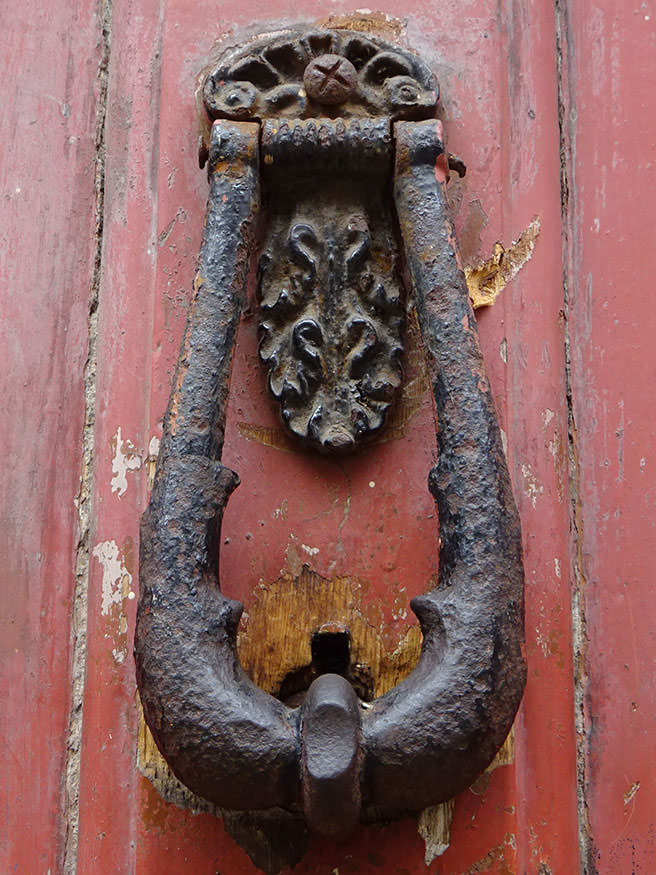
U-shaped door knocker | H is for Home

Door knockers are thought to have originated in ancient Greece, when… wait for it… a slave was chained to the door. Their sole purpose was to open the door for recognised visitors. If they’d fallen asleep, the metal ring that they were chained to acted as a knocker to wake them up. We’re pleased to announce that no one was chained to the doors of Spitalfield! Ancient Rome adopted the custom and door knockers became a feature of wealthy houses throughout the empire. Over time, they developed from a simple ring into the more elaborate designs.

Sphinx's head door knocker | H is for Home Sphinx's head door knocker | H is for Home

Think of all the people who’ve knocked on them over the years – from tradespeople delivering & hawking their wares to dinner guests in their finery. Imagine all the characters and costumes! That’s the wonder of historical objects. And there are fascinating little historical side stories to be uncovered. For example, the design below is early Georgian and known as the ‘Doctor’s door knocker’ as it actually indicated where a doctor lived. It has now become one of the more commonly reproduced classic examples seen throughout the UK.

S-shaped door knocker | H is for Home

Adelle was given an antique lion’s head door knocker many years ago by her dad to put on the front door of her first ever flat – and it’s been mounted on every front door of every house lived in since. The lion represents bravery, valour, nobility and strength. It’s seen as a protective force for those living within the house. Alas, it doesn’t seem to put off cold callers or the delivery of bills.

Ladies hand door knocker | H is for Home Ladies hand door knocker | H is for Home

We saw lots of these lovely hand knockers that day. They’re based on the hand of Fatima – a palm-shaped amulet that protected against evil. It was seen as the perfect form for a door knocker, protecting the house inhabitants in the same way. They were common in countries around the Mediterranean, from where their popularity spread. Fatima is also known as Hamsa – the daughter of the prophet Muhammad – and her symbolic hand is a popular talisman across the Middle East and Northern Africa.

Ladies hand door knocker | H is for Home

An attractive door knocker has such presence – and makes a very good first impression on visitors.And when you wander round historical streets like those in Spitalfields, with different knockers on every door, it adds such interest to the rows of houses. These pictures represent only a small selection of those we saw that day. If we ever return to the area (which we’re sure that we will), we’re going to create a more comprehensive image catalogue.