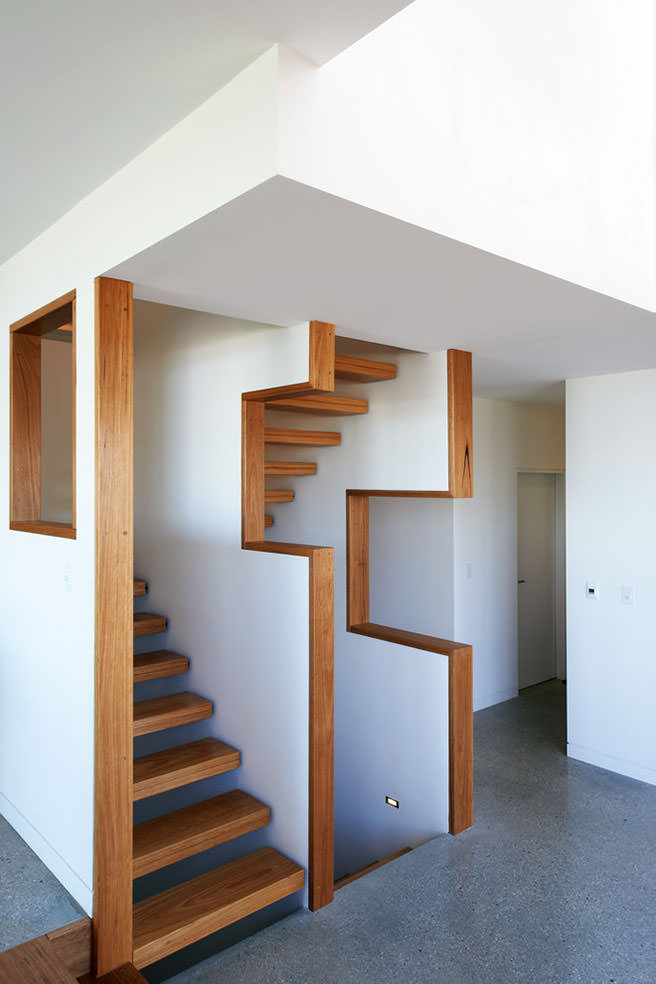
Be bold when renovating your household

Be bold when renovating your household | H is for Home

A renovation project is always exciting; it’s an opportunity to refresh the aesthetic of your home. It’s a chance to regain the original appearance that your humble abode had. Time wears out a property, and that’s unavoidable, but you can always make improvements to get it back into shape. Regular maintenance will keep your house looking well-designed and feeling comfortable in the future, but you might have to get back to basics if you’ve recently been neglecting the upkeep of your property. These are some ways to be bold when renovating your household.
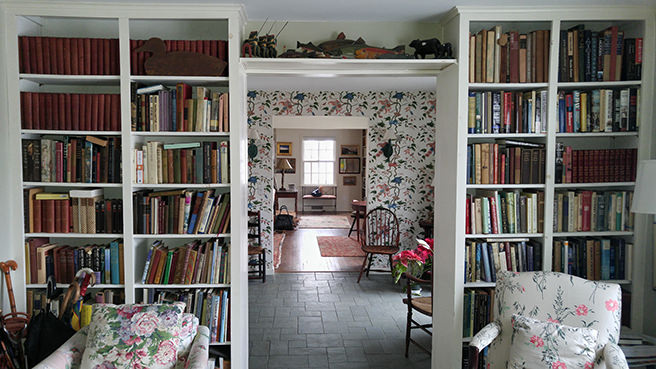
Open plan apartment

Rethink the way you use space

Some people decide to move when they run out of space in their home. However, in many cases, the problem is that home-owners are simply using their available space ineffectively. If you want to renovate your household in a bold way, you should rethink the way you use space. This might not sound as if it would revolutionise the design of your household, but you’d be surprised by the effect of a good layout. So, you should start by decluttering. Clutter can make rooms feel smaller, so it might be time to start selling your old belongings and giving some of them to charity or storing away items for later use in a storage unit at Henfield Storage London.

You could finally have a minimalistic home; you just need to clear out the things you don’t want or need. Of course, using your space well is important, too. Getting rid of clutter will make some room, but you also need to think about the way in which you store your belongings. For example, you could erect more shelves to create storage space for some of your things.
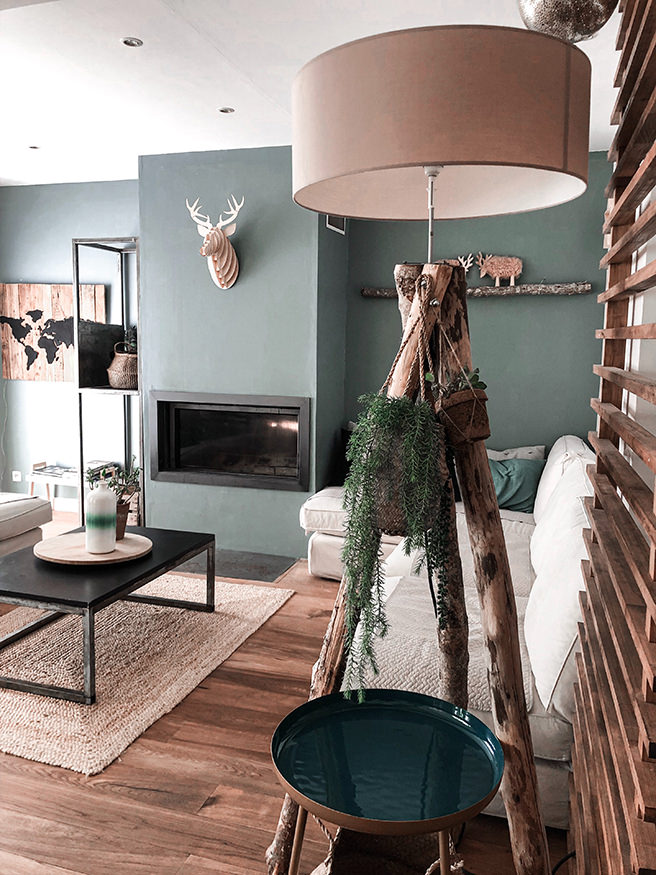
Pink and grey decorated apartment

Restore old furnishings

Before you go out and buy new furnishings for your household, you might want to look at the things you already own. Often, old furnishings can be restored. A lick of paint, for instance, can make an old cabinet look brand new. A vintage aesthetic can be intentionally stylish; it all comes down to presentation. If you have an old and broken chair, for instance, then you could use it as a table for a plant pot in your back garden. Get creative when it comes to your use of old furnishings. You might want to seek help from the Devine rug cleaning service if you have any old rugs that look a little worse-for-wear. Sometimes, a deep clean can entirely restore an old furnishing.
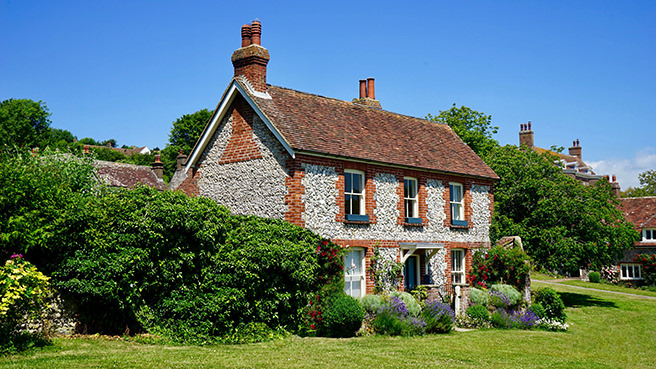
Stone country house

Renovate the front of your house

If you really want to transform the overall appearance of your home, you should renovate the front of your house. Start with the front door. You might want to replace it, or you could simply repaint it to make it appear brand new again. The entrance to your household is very important; it should make you feel as if you’re being welcomed into your own home. Of course, the entire exterior of your property should have this effect. You might want to repaint or replace any timber work. You could also do some landscaping; fresh flowers planted outside your house could create a colourful and soothing design for your property. Your home’s external appearance counts.

[disclosure*]

8 steps to creating your dream home

8 steps to creating your dream home | H is for Home

If you’re in the process of buying your dream home and making it your own, you’ve definitely come to the right place. Whilst buying your own home can be an incredibly exciting time of your life, it’s also one of the most stressful things you will ever do. With so many different things to consider before you even get started, you will need to be sure you’re planning absolutely everything you can well in advance. From wallpaper choices to the garden renovation, you want to be on top of things from day one. With that in mind, here are 8 steps to creating your dream home:

Make sure you have a budget in mind

The first thing you need to do is to make sure you have a budget in mind. Whether it’s a budget for the entire house move or a budget for your renovations, thinking about each individual aspect of your house is the best way to ensure you arrive at an accurate figure. Although this will involve a little bit of research when it comes to the average cost of move or renovation, the more clued up you are the more realistic your estimate will be. For tips and tricks on budgeting for your dream home, you can visit this guide here.

researching online on a laptop

Find as much inspiration as you can online

When it comes to renovating your dream home you’re going to want to make sure you’ve found as much inspiration as possible. With so many different trends and styles to consider, doing as much research as you possibly can is the best way to ensure you have picked the perfect choices for you. Use websites like Instagram and Pinterest to see how other people are styling similar rooms, pulling together your favourite aspects to make your dream home.

Shop around for materials and décor

If you’re buying your materials and décor yourself, make sure you’re shopping around. Whilst some products may only be able available to buy at one store, others may be considerably cheaper elsewhere. Although you may have quite a large budget when it comes to your renovations, anything you manage to save means you can put more money into something else. For tips and tricks when it comes to shopping around, you can visit this site here.

Speak to a professional for advice

If you’re unsure what renovations you’re going to be able to do with the house you have bought, you may want to speak to a professional for advice. Not only will they be able to tell you what is possible and what isn’t, but they’ll also be able to give you an estimated cost and renovation time. If needed, they’ll also be able to suggest contractors that can carry out the work for you. Whilst speaking to a professional can be expensive, it’s great for those with not interior design skills.

Architectural visualisation of a row of retirement homes

Use a visualisation tool to view your plans

If you want to take it a step further you could always choose to use a visualisation tool to view the plans you have in mind. There are lots of places where you can go to view an architectural visualisation of what your home may look like should you carry out a specific renovation. Whilst it may be another expensive option, it’s a great way to visualise how things can look once finished.

Give yourself enough time to renovate

Although you’ll be excited and want to finish your renovations as soon as you possibly can, it’s important that you’re giving yourself enough time to renovate. Whether you’re renovating before you move into the property or you’re doing it as you move in, you need to consider how much time certain rooms are going to be unusable. If it’s going to take a long time, you may want to consider doing all of the renovations before you move in.

Empty room with large double doors, blank white painted walls and wooden floor

Consider things that will be timeless

When it comes to choosing a design, it’s important you’re thinking of things that will be timeless. Whilst you can change the design of your home as often as you like, using designs that can be easily adapted to upcoming trends is the best way to ensure you’re not spending ridiculous amounts on decorating every time you update a room.

Remember, it’s all in the detail

Finally, it’s important to remember that when it comes to renovating and decorating your dream home – it’s all in the detail. Whether it’s adding your own personal touch using photographs and keepsakes or adding wall art and plants to add a bit of character to a room – you’ll be surprised how much difference the little details can make to a home.

Are you in the process of creating your dream home? What do you think needs to be considered in order to make it as easy as possible? Let us know in the comments section below.

[disclosure*]

What key factors should you take into consideration when renovating your home?

What key factors should you take into consideration when renovating your home? | H is for Home

British people love DIY and home renovations. Whether it’s painting and decorating or adding whole new sections to our living spaces, we enjoy making our homes as comfortable and as eye-catching as possible. We’re also big fans of DIY shows such as ‘Amazing Spaces’ and ‘Homes Under the Hammer’.

TV doesn’t always paint an accurate picture of home renovations, however. Whilst giving your home a new lick of paint is fairly straightforward, other tasks like adding an extension are a bit more complex. Outside factors can slow you down considerably if you don’t plan ahead. So, what key factors do you need to take into consideration when renovating your home?

Builder up a ladder in a dusty room

1. Make your neighbours aware of the work

The Part Wall Act of 1996 stipulates that you have to notify your neighbours of any renovation projects.  This occurs if you share a wall with another house and your work may undermine the structural integrity of the wall. Tasks such as fitting shelves and re-plastering aren’t included in this Act; however, if you were looking to undergo more extensive work it’s something to which you must adhere.

This approach may seem unnecessary in some cases, but it’s always polite to notify your neighbours of what work will be taking place. Present this to them alongside a copy of the Act two months before you intend to carry out the work. They will then have 14 days to raise any concerns they may have and provide written approval or rejection. Doing this will cover you if anything turns sour with said neighbour. If they do reject your proposal and it’s impossible to come to some form of agreement, you’ll be required to assign a surveyor who will then determine what work can be carried out.

Internal renovation work

2. Get building regulations approval for loft conversions

Converting a loft is another easy way to create more space in your home. However, make sure you get the correct building regulations approval. This is required to ensure there is sufficient structural strength to the floor, while also making sure that the existing roof and the structure’s stability isn’t jeopardised.

Many houses do not have sturdy enough flooring in their lofts to support a lot of weight. This could cause issues if you plan to turn your loft space into a spare bedroom, for example, and without official planning meeting set regulations you could run into a host of problems. Perhaps surprisingly, any work that you carry out could indeed hinder your future sale if you don’t get the appropriate permission and paperwork. In some instances, you’ll be required to revert the property back to its former state if you haven’t gone through the correct channels when carrying out the work.

Construction work taking place outdoors

3. Check your electricity

Electricity is an important part of home renovations which is often overlooked until work gets under-way. Sometimes, work you plan to carry out will mean moving your electric meter and fuse box. However, you must make sure you don’t move it yourself. Why? Yep, you guessed it; this is also illegal. Usually, if it’s a move of less than 15 centimetres, this can be carried out by your energy supplier free of charge. But for larger-scale moves of over three metres, your local distribution company would have to move your mains supply before the electricity meter can be relocated. If this is something you require, make sure you book the relevant appointments to avoid long delays.

Drawing blueprints for a house

4. Check if you need planning permission

Garage conversions generally don’t require planning permissions if you aren’t intending to increase the size of your house by making the garage larger. If your sole purpose is to use the space for personal gain, then you should be able to carry out your intended work so long as you complete the work thoroughly and to the correct standard. However, it’s important to note that planning permission must be sought if you’re looking to convert the space into a separate house.

Wood frame work on house renovations

5. Planning for an extension

Extensions are a popular way to add extra space to your home. However, not everyone understands the impact it may have on your property. For example, have you considered the impact an extension will have on your current boiler? Adding extra space will mean there’s an added demand on your hot water system and, in some cases, your boiler won’t be able to cope. Make sure you factor this in to any plan.

Even if you don’t require planning permission, due to using permitted development rights, you’ll still need building regulation approval. In some cases, you may also need to pay a Community Infrastructure Levy, so it’s important to investigate this prior to conducting any work.

Hole made in an internal wall between two rooms

6. Check if your home is a listed building

Some buildings in the UK fall under the listed building category – you should have been informed if your home was listed at the time you bought the property.  If it is, then chances are you’ll struggle to carry out any planned work without resistance. It’s actually a criminal offence to simply go ahead with any work without prior authorisation to do so. If you’re unsure whether or not your property is a listed building, you can check at British Listed Buildings.

Whilst renovating your home can be an exciting experience, you’ll have a lot of hard work to undertake before you can enjoy the finished product. For any work you may be thinking of carrying out, it’s important to carry out thorough research before you start so that hidden costs and issues don’t creep up on you.

[disclosure*]

Popular ways to gain access to your loft conversion

Popular ways to gain access to your loft conversion | H is for Home

Decisions about types of access to your new loft, will be based upon the space you have available for access. The type of access you can install will, in turn, dictate the practical use to which you can put the loft. So, this is really the place to start with your planning.

Remember, you must comply with all the appropriate building regulations if you are converting your loft and there are specific regulations relating to stairs if you plan to convert your loft into a liveable space. Although a loft conversion does not normally require planning permission, there are some limits and conditions which apply, so have your plans checked thoroughly before you start.

Compact staircasecredit

New staircase

Depending on the layout of your home, the space available and the options for entry points into the loft you could install a new staircase in the stairwell and continue your existing stair design. If you cannot extend from the stairwell you could have a separate staircase installed which could be in a traditional, open riser or alternator style, straight, dog-leg or L-shaped, according to your requirements. Staircase options allow for a full loft conversion because of the easy access they provide.

Black painted metal loft laddercredit

Loft ladder or retractable stairs

If the space for access is limited, you may only be able to install a loft ladder or retractable stairs. This would make your loft suitable for storage use or limited access – perhaps to house a model railway or snooker table. Loft ladders and retractable stairs are available in metal or wood in a range of practical designs; folding or sliding, manual or electric. To comply with building regulations, you could not normally convert the loft in to a liveable space if you only have room for a loft ladder or retractable stairs as these would not provide a safe escape from fire.

Spiral stairs

Spiral staircase

If you’re looking to save space and have an access point not obstructing frequently used walkways, then a spiral staircase is a great option. These come in a whole range of styles and sizes and consist of a central column out from which the treads fan. Treads can be made from a variety of materials including wood, metal, glass, acrylic and stone so you’re sure to find a style in keeping with your décor. Check whether your space-saving stairs comply with loft conversion building regulations prior to installation.

Floating stairscredit

Floating stairs

Floating stairs make a beautiful design feature in any home. If you like the look of floating stairs but are nervous about the openness, especially if you have small children, don’t worry, clear balustrades and hand rails can be incorporated without detracting from the design impact. While these can be made in a wide range of materials there are some building regulations relating to their design so, again, ensure you check first.

Bespoke curved stairscredit

Bespoke

Whatever style of access you select for your loft conversion, you can have a bespoke design to meet your exact requirements. Whether you want straight, spiral or floating you can choose from a wide variety of materials and design features to get the exact look, either blending in the access point or making a bold statement.

[disclosure*]