A guide to buying a home abroad

A guide to buying a home abroad | H is for Home

It’s often a complicated enough process buying property locally. When you buy abroad, this opens up all kinds of new complications. That said, it doesn’t have to be stressful – with the right amount of organisation and help, you can make buying a home abroad easy. Here are ten tips for buying overseas.

Holiday home with infinity pool

Define your long-term goals

First you need to decide what your property will be used for. Is it a home in which you live out the rest of your days? Or do you plan to sell again in a few years’ time? Is it a second home to use as an investment – and if so do you plan to rent it out to tenants, rent it out to people on vacation or simply do it up and resell it?

Having a clear understanding of your goals will help you to find the right property and the right mortgage. It may even help you to determine whether buying a property is the right decision after all – if you’re only staying abroad for a couple years, renting may be an easier option.

Searching for an international mortgage

Shop around for the right mortgage

In most cases, you’ll need to take out a foreign mortgage in the country in which you’re buying. This has to be paid in foreign currency (although some lenders may give you the backup option of paying in your home currency if you aren’t able to meet payments due to a disaster).

There may be different mortgages for different types of purchase. For example, a vacation home may need a different mortgage to a property you plan to use as your primary home. You may want to read guides to foreign mortgages such as this Expatica guide to Spanish mortgages to better understand your options.

Currency exchange rates with Euro cash

Be wary of fluctuating currency rates

A big issue when buying a property abroad is the different currency rates. When paired with a variable mortgage, it could make payments very hard to predict each month. Make sure to keep an eye on currency rates to get an idea if your currency is rising or falling. This could allow you to pull out early if need be, rather than waiting it out until the mortgage is so high that it’s practically unpayable.

Income tax workings out

Research into taxes

Property tax laws are likely to differ abroad. Some countries may have a land tax whereas others may have capital gains tax when selling. Meanwhile, if you’re renting out owned property to tenants, the income you’re earning will have to be taxed, which could differ depending on the country in which you reside. Researching into these taxes could ensure that all these taxes are correctly paid and that you don’t get caught out by an unexpected tax bill.

Two people discussing a legal contract

Hire legal and financial help

If you’re already getting scared by the idea of different currency rates and different property laws, don’t worry – you can always hire advisors to help you. A legal advisor could be useful for helping you to understand foreign property laws as well as handling the paperwork and checking that everything is legitimate. A financial advisor meanwhile may be able to help you get a mortgage and may be able to help you with taxes and currency conversions. In both cases, you may want to hire international specialists such as this international law firm. Having them to guide you through the process could offer peace of mind.

Multi-language dictionaries

Consider hiring a translator

When buying property in some foreign countries, hiring a translator could be handy. This could be to deal with agents or translate paperwork. International financial and legal advice firms may already have translators they can call upon for you.

Transport lorry on a road

Consider if any other professional help is needed

Other professionals may come in handy during the process. To check the property for signs of damage and risks of future repair bills, it could be worth hiring a surveyor. You may also have to consider an international moving company if you’re moving your stuff over there. As for a property that you hope to rent out, you may want to consider hiring a property ladder to clean it and maintain it, as well as handing over keys. All this will need to be considered when working out your budget.

Searching the internet using Google

Use the internet to your advantage

The internet can be a big help every step of the way. Listing sites such as these rumah dijual di Indonesia could save you having to fly out and look round local estate agencies. It may even be possible to do property viewings over Skype. That said, you may feel that you still want to visit the property in person before buying.

Two people speaking over a map

Research the neighbourhood

It’s important that it’s in the right location. Do your research into the neighbourhood both by visiting the location in person and by doing digital research such as looking into local amenities, crime stats and school pass rates.

Man tying up paperwork

Make sure paperwork is supplied

The purchase of your new property should come with all the correct paperwork. This paperwork needs to be legally water tight. This is something that you’ll want your legal advisor to check.

[disclosure*]

6 reasons flats are better than houses for first time buyers

6 reasons flats are better than houses for first time buyers | H is for Home

A lot of people live in a flat when they’re younger. Most of the time, they’re renting until they can afford to get on the property ladder. When you’ve finally got the money you’ve saved up for your property together to buy a place of your own, not many people consider buying a flat. If you’re going to invest a lot of money in a place to live, you want as much space as possible so you can raise a family in the future.

But that’s not always the best option, especially for first time buyers. Even though you may not have considered it before, there are actually a lot of benefits to living in a flat rather than a house and it may be a better option for your first property. It’s not right for everybody, but these are some of the reasons that flats could be better than houses for first time buyers.

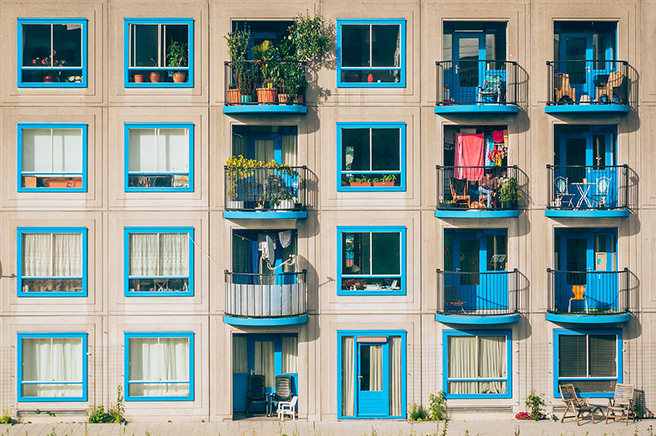
Block of flats with blue painted window frames, doors and balconies

Price

The most obvious benefit is the price. House prices are so high at the moment and it’s a real struggle for first time buyers to find the money that they need to put a deposit down on a house. So, many young people are living with their parents into their late 20s and early 30s just so they can save money on rent and pull together the money that they need for a deposit. But if you’re looking at buying an expensive 2 bed house, it’s going to take you a lot longer.

If you take a look at the hdb resale price index and compare the cost of buying a flat with the cost of buying a house, you’ll see that the former is a lot more cost effective. You don’t need to worry too much about having enough space in the future because you’re more than likely not going to live in your first home forever. Your priority at the moment is getting on the property ladder and buying a flat is the easiest way to do that. When you get a bit older and start thinking about starting a family, you can sell up and move into a house, but for now, a flat suits your needs just fine.

Striped apartment block against a blue sky

Costs

First time buyers usually get a big shock when they realise just how much it costs to run a home. Many rental properties have bills included in the monthly rent so they don’t have a sense of just how much they’re going to spend on energy. Even if you’re paying your bills separately, the landlord is still covering the cost of maintenance. If your boiler breaks down or the washing machine packs up, you can just call them and they’ll get somebody out to fix it and cover the cost. But once you’re a home-owner, it’s up to you to pay those costs. Chances are, you won’t be able to afford a new build home if you’re a first time buyer which means you’ll have to buy an older property that is likely to need more regular repairs.

The more space that you have, the more work will need doing. That means that a smaller flat will be a lot cheaper to maintain properly than a house. A lot of the work, especially anything to do with the structure of the building itself, is still handled by the freehold owner of the building. Structural repairs are the most expensive home repairs, so you could be saving yourself a lot of money there as well.

As well as the cost of repairs, you’ll also save money on energy costs if you’re living in a flat rather than a house. The less space you have, the cheaper it will be to heat your home so the running costs in a flat are a lot less than a house.

City centre flats above shops and offices

Location

Location is one of the most important things when you’re choosing a property and often, it’s cheaper and easier to find a good location when you’re buying a flat. If you’re young, and you’re just starting your career, you’ll probably want a good city centre location. Somewhere near business hubs such as Park View City Commercial Downtown. It’s also good to be close to restaurants and bars etc. But if you’re looking for a house that is close to the city centre and within walking distance to all of those things, you’re really going to struggle. You might be able to find one, but the price is going to be way over your budget in most cases.

Alternatively, you may want to move for other reasons. Houses for sale in Jersey are popular. Having tax haven status and a beautiful island to match, this could be a perfect location for some.

Flats, on the other hand, are all over the place in a city centre. You’ll still have to pay a premium for the best locations but compared to the cost of a house in the same area, you’ll pay a lot less. There’ll also be a lot of cheaper flats on the outskirts of a city so you’re still well-placed as long as there are good public transport links, and you won’t need to spend that much.

Burglar using a crowbar on a door

Security

Security is a big concern for home-owners, especially if you’re living in the heart of a big city. In a house, you don’t have that much security beyond the measures that you put in place yourself. You may install security cameras which operate even at night. Lights and fences, among other things, can help you keep intruders out of your yard. When you’re away from home, though, you have very little protection.

Compared to a house, a flat is so much more secure. Often, they’ll have a gate you have to get through before you even get close to the building. Then they’ll have to get through the main doors of the building, make it to your front door and get through that as well. In a hallway with a lot of other flats, it’s going to be difficult for somebody to break in so you’re pretty safe in a flat. You might not be quite as safe if your flat is on the ground floor but even then, a flat is far more secure than a house.

Apartment complex basketball court

Amenities

We’d all love to have a big house with a swimming pool in the back garden and a gym in the basement, but most people can’t afford that. However, a lot of flat complexes, especially the bigger ones, come with those kinds of amenities included. If you’re moving into a place that has all of these added extras, it is going to cost you a bit more than a normal flat, but compared to a house that has a personal swimming pool and a gym, it’s way cheaper. Even if you don’t move into a fancy flat with all of those things, you’ll still get access to communal washing machine facilities etc. which saves you money on buying your own.

Two-tone brick apartment block with balconies

Investment value

When you buy a property, you should see it as an investment. If you’re in a good financial position in a few years, you could even consider renting out your first property while you buy a second one. The rent from your existing property will be enough to cover the mortgage on that plus a little extra towards the mortgage on your new house. When you’re trying to rent out a property, you’ll have a lot more success with a nice city centre flat than you would a cheap house. If you don’t like the idea of keeping 2 properties and you’re going to sell up, a flat is still a better choice a lot of the time. It’ll be easy to find a landlord that wants to invest in a new flat so you can get a good price for it.

Living in a flat isn’t ideal for everybody and it probably won’t be enough space if you’re raising a family. However, if you’re a first time buyer, it could be your best option.

[disclosure*]


The hidden horrors of a home

The hidden horrors of a home | H is for Home

We don’t doubt that you have mixed feelings about your home. One day you feel happy and blessed to have a roof over your head, then the next you’re fretting about the problems it’s creating. The biggest issues that you might have from the very beginning are often concerned with money. It’s something you can’t escape – but hopefully it’s also something that you can learn to manage, gradually getting a little bit more relaxed and comfortable.

However, sometimes it’s not what you can see on the surface that is the worst, it’s the things you that you don’t know are going wrong with your home. The hidden horrors that you might be facing without even realising. It’s these horrors that may one day turn around and bite you – and if they do, you need to have some sort of action plan to help you remedy it. This is why we’ve created this list for you – some of the hidden horrors of the home, and how we think you can stop them from becoming your worst nightmare!

Illustration of a house under a magnifying glasscredit

A new home horror

Moving into a new home should be a happy occasion. It should be a time in your life where you feel like you’re making progress, but it isn’t always the way. You could move into a home without having it thoroughly checked out, and that could lead to complications in the future. What you need to do is get the house surveyed. If carried out properly, they should spot any underlying problems that a superficial viewing of the home won’t tell you. You’d then need to know how to negotiate a house price after a property survey, because you won’t want to pay the full asking price for a home that’s full of issues. In fact, you may not want to move into the house at all!

House pest

The unwelcome guests

Unwelcome guests could be lying in wait right now under your floorboards or in your walls and you simply aren’t aware of it. There can be all sorts of bugs and creatures living in your home – and not just spiders or ants that are generally harmless. We’re talking about things like termites, woodlice and other pests that could cause major problems. If you notice an unusual bug or two in your home in a suspicious place, it’s recommended to get an exterminator in to investigate before they do serious damage!

Pipe wrenches stopping a leak

The financial mess

A financial mess can occur at any time when owning your own home, but it generally happens when something goes wrong for which you weren’t prepared. Perhaps a water leak, a fire, or something completely unexpected that will cost you a pretty penny to repair. To prevent a financial disaster, consider building up some savings to dip into in case of an emergency. As long as you have all the essentials covered; utility bills, food in the fridge and clothes to wear, try to put a little extra away when you can.

[disclosure*]

How to reduce the cost of buying a home

How to reduce the cost of buying a home

Are you considering moving to a new house but aren’t keen on the costs that come with it? If the answer is yes, you might be pleased to know that just because buying a house can be expensive; it doesn’t necessarily have to be. The truth is that you can buy property without it breaking the bank, it’s just a case of taking steps to minimize the amount that needs to be spent.

When you invest in property, whether it’s to live in or to rent out to make a profit from, there’s usually a range of fees that come with the purchase. In addition to a variety of other costs. However, just because these costs can be high, they don’t have to be. Want to reduce the cost of buying a home? Below is a list of useful tips that it is worth implementing in your property purchasing search, to help reduce your buying costs.

House shaped from £20 notes

Take out a 95% mortgage

One of the most significant costs that comes with purchasing property is the cost of the deposit. To be accepted for a mortgage loan, usually a 25% deposit is required, sometimes even more than that. This is a lot of money and can be one of the highest costs associated with buying property. However, the good news is that there are 95% mortgages that you can consider taking out. These are mortgages where you only need a five percent deposit, rather than a 25% one. Not all mortgage companies offer these types of mortgages and not everyone is eligible for them, but if you take the time to do your research and shop around, you may be able to successfully apply for this kind of mortgage and save yourself thousands.

Mortgage document

Save on the cost of fees

Another high cost that is associated with purchasing property is the cost of covering the fees that come with buying a property. These can run into thousands and are usually incredibly high in price. Platforms like OwnUp have been created to solve this problem. However, there are steps that you can take to reduce the cost of these. One of these steps is by using the Open Listings websites to house hunt, make offers online, and securing a 50% commission refund. Believe it or not, there are lots of websites that offer a range of deals for buyers, helping to save money on the cost of property fees. Take the time to do your research, and you’re sure to come across some incredible deals.

Moving cardboard boxes

Move out of your old home & into your new one

The moving costs that come with purchasing a new home can also be high. Instead of renting out a moving van and professional movers, consider moving yourself out of your old home and into your new one. The process may take longer and be more stressful, but if it reduces the cost of moving to somewhere new, surely it is worthwhile?

Buying a new home is always going to be costly. However, it doesn’t have to be overly expensive.

[disclosure*]