
It’s been a little while since I made an afternoon loaf cake – and this date, walnut and coffee loaf with espresso buttercream has been a welcome return.

The recipe starts similarly to sticky toffee pudding; soaking the chopped dates in hot liquid with a spoonful of bicarb. In this case, strong black coffee rather than water.


After this initial stage, the recipe reverts to the familiar cake-making method. You cream the butter with sugars, sift together the dry ingredients and finally fold in the fruit and nuts.


The original recipe that I borrowed said that it would make one loaf – the quantity of mixture produced actually allowed me to make one large (using a 1kg/2lb loaf tin) and one smaller loaf. I’ll be giving the little one to Granny Glittens.

Usually, my loaf cakes go well with a cup of tea. However this one, obviously, suits a mug of coffee better!

Super-moist and sweet – a delicious mid-afternon treat!

Save this date, walnut and coffee loaf with espresso buttercream recipe to Pinterest


- 300g/10½oz chopped dates
- 360ml/12½ fl oz hot, strong, black coffee or espresso
- 1½tsp bicarbonate of soda
- 210g/7½oz plain flour
- 1tsp ground cinnamon
- ⅛tsp grated nutmeg
- ¼tsp fine salt
- 60g/2oz butter
- 150g/5¼oz soft brown sugar
- 100g/3½oz granulated sugar
- 1 egg
- 2tsp vanilla paste
- 100g/3½oz walnuts, toasted and roughly chopped
- 2 tbsp hot water
- 1tsp very fine ground or ½tsp instant espresso powder
- 225g/8oz icing sugar
- 45g/1½oz melted butter
- 1tsp vanilla paste
- 50g/1¾oz walnuts, toasted and roughly chopped


- Preheat oven to 175ºC/350ºF/Gas mark 4
- In a large bowl, combine the dates, hot coffee or espresso, and bicarbonate of soda. Set aside
- In a small bowl, combine the flour, cinnamon, nutmeg and salt
- Using a mixer cream the butter and sugars
- Beat in the egg and vanilla
- Strain the date mixture and set the dates aside
- Add the date-soaking liquid, alternating with the flour mixture (about 3 rounds) to the ingredients in the bowl; ending with the liquid
- Fold in the dates and toasted walnuts
- Grease loaf tin(s) with a little butter or baking spray. Insert a tin liner or cut parchment paper to fit the bottom and sides
- Pour the batter into the greased and lined loaf tin(s)
- Bake for 55-65 minutes, or until a skewer inserted into the center comes away clean
- Cool for 20 minutes before removing from the tin; remove the parchment and put on a wire rack to cool completely
- Combine the hot water with the espresso powder and stir until blended
- In a small bowl, whisk together the icing sugar, melted butter, vanilla and espresso
- Spoon & spread the buttercream evenly over the top and scatter the chopped walnuts
- Slice & serve
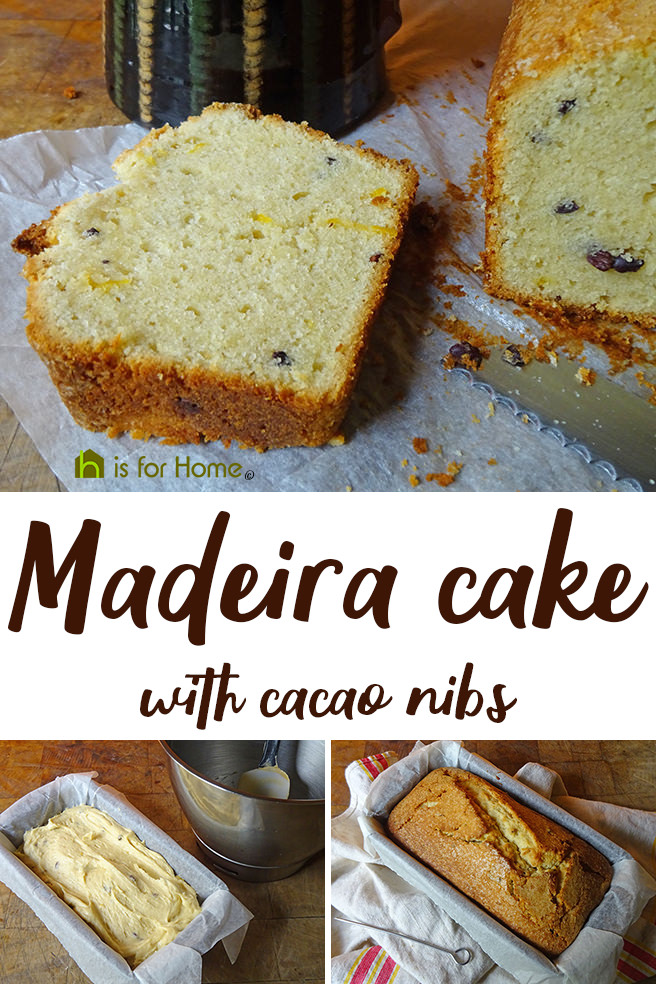
Cakes & Bakes: Madeira cake with cacao nibs

Madeira cake, I always thought, came from the island of Madeira. Apparently, it doesn’t. It’s a British invention that was traditionally served with tea… or Madeira wine.
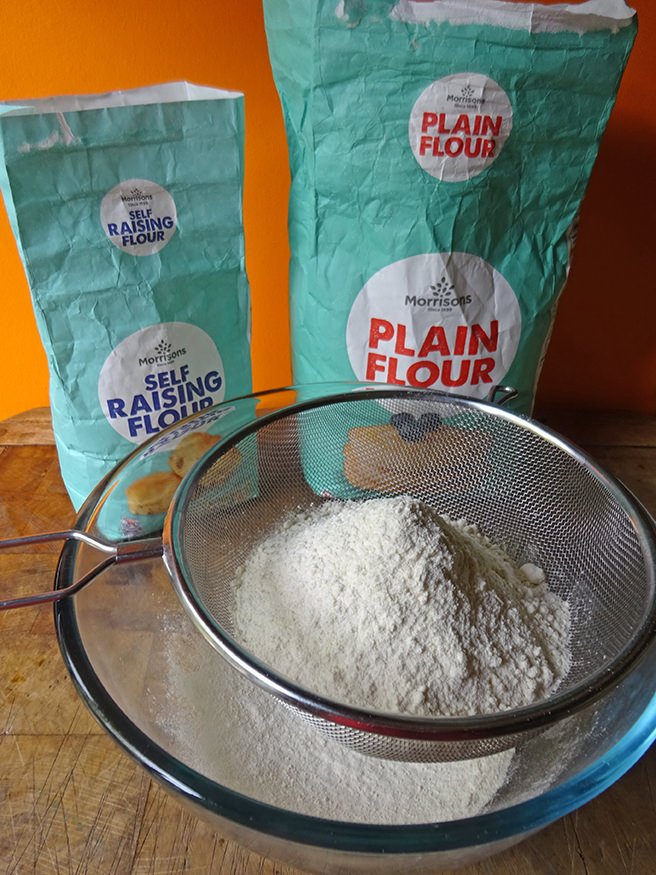
Instructions by Eliza Acton, in her Modern Cookery for Private Families published in 1845 (which contains one of the earliest ever mentions of a Madeira cake recipe), are as follows:
Whisk four fresh eggs until they are as light as possible, then, continuing still to whisk them, throw by slow degrees the following ingredients in the order in which they are written: six ounces of dry pounded and sifted sugar; six of flour, also dried and sifted; four ounces of butter just dissolved, but not heated; the rind of a fresh lemon; and the instant before the cake is moulded beat well in the third of a teaspoonful of carbonate of soda: bake an hour in a moderate oven.
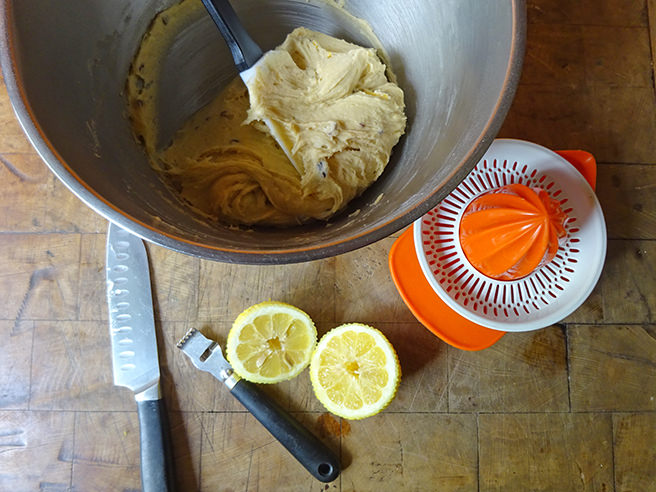
Justin and I disagree on this cake; he likes the lemon but not the addition of cacao nibs and, you guessed it, I like the cacao nibs but not the lemon. We’re like Jack Sprat and his wife! Next time, I’ll divide the batter between two smaller tins. In my half, I’ll omit the lemon zest & juice and add the cacao nibs; in the other half’s half, I’ll omit the delicious little nuggets of pure chocolate!
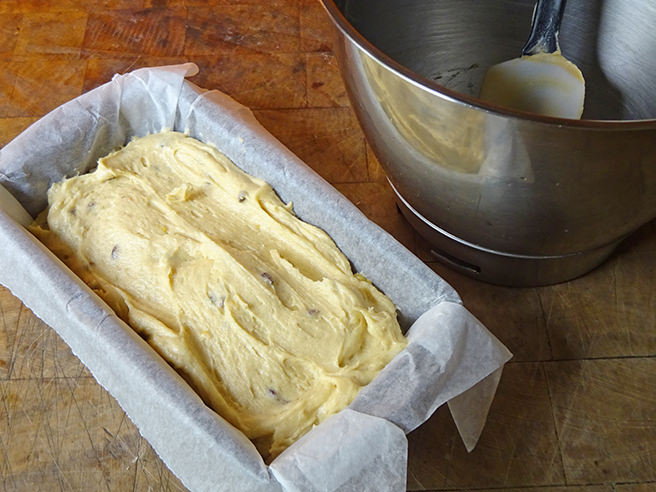
This cake is best if allowed to cool completely and eaten on the day of baking; it gets dry quickly. Alternatively, some people recommend adding a teaspoon of glycerine per egg to help maintain its moisture.
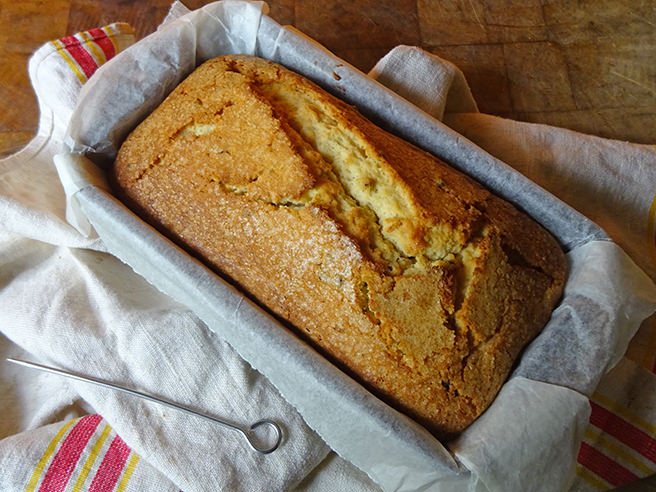
Failing that, from day two onwards, you can always slice it and spread it with a fruit jam or jelly… or chocolate spread!

Madeira cake with cacao nibs
Ingredients
- 240 g/8½oz unsalted butter softened
- 200 g/7oz caster sugar
- 1 un-waxed lemon zest and juice
- 3 large eggs
- 1 tsp vanilla extract
- 210 g/7½oz self-raising flour
- 90 g/3oz plain flour
- 25 g/1oz cacao nibs
- 2 tbsp granulated sugar
Instructions
- Line a 900g/2lb loaf tin with parchment paper or pre-made loaf tin liner
- Preheat the oven to 170ºC/150ºC fan/325ºF/Gas mark 3
- Using a stand mixer, cream the butter and sugar
- In a small measuring jug, beat the eggs with the vanilla extract
- In a separate mixing bowl, sift together the plain and self-raising flour
- With the mixer on a low speed, slowly pour in the beaten eggs in three stages, alternating with the addition of a tablespoon of the flour (to stop the mixture curdling)
- Add the remaining flour, cacao nibs and lemon zest
- Mix in the lemon juice
- Pour the batter into the lined loaf tin and level using a spatula or back of a spoon
- Sprinkle the top with the granulated sugar
- Bake for 1 hour or until a skewer inserted into the centre comes away clean
- Allow to cool in its tin for ½ hour before turning out on to a wire rack

Cakes & Bakes: Sticky toffee loaf cake with fudge icing

Another week, another afternoon loaf cake requested by Justin. The one I’ve chosen this time is Delia’s sticky toffee loaf cake with fudge icing. None of Delia’s recipes have ever let me down!

Thanks to the treacle and spices, it’s quite a dark, wintery, warming cake; perfect, considering that I can see a light flurry of snowflakes falling outside as I write this!

It’s a straightforward recipe – a bit of heating, a bit of mixing – and a long, slow bake. As Delia recommends, this cake is best left overnight before tucking in. The various ingredients have time to combine and settle into each other.

The resulting cake is full of flavour – substantial, yet not hard going. Perfect with a cuppa!


My ‘dark brown’ soft sugar was quite light in colour and I didn’t have any golden icing sugar, so I used Muscovado sugar and plain white icing sugar instead. I reckon the resulting shade of my icing matched Delia’s fine. I had to apply it a little sooner than I would have ideally liked to ensure there was still a bit of daylight for a photograph. Make sure that your loaf is completely cooled before topping with icing otherwise it will just melt.

Click here to save the recipe to Pinterest

- 1 level tsp mixed spice
- 2 level tsp ground ginger
- 1 level tsp bicarbonate of soda
- 110g/4oz stoned dates
- 50g/1¾oz pecan nuts
- 110g/4oz spreadable butter
- 50g/1¾oz black treacle
- 175g/6oz golden syrup
- 150ml/5¼fl oz milk
- 2 large eggs
- 225g/8oz plain flour
- 4 tbsp evaporated milk
- 3 tbsp dark brown soft sugar
- 50g/1¾oz butter
- 150g/5¼oz golden icing sugar

- Pre-heat the oven to 150°C/300ºF/Gas mark 2
- Line a 500g/1lb loaf tin with a loaf tin liner
- First, place the tin of black treacle (without its lid) in a saucepan of barely simmering water to warm it up and make it easier to measure (I needed to do the same with the golden syrup)
- Next prepare the dates and pecans. The nuts should be chopped fairly small and the dates should be chopped into equally small pieces
- Put the butter, black treacle and syrup into a large saucepan and melt them together over a gentle heat
- Remove the mixture from the heat and allow it cool for a few minutes, then mix in the milk
- Beat the eggs before adding those to the syrup mixture as well
- Sift together the flour, spices and bicarbonate of soda into a bowl. Gradually whisk the syrup mixture into the dry ingredients, bit by bit, until you have a smooth batter
- Lightly stir in the pecans and about ⅔ of the dates, then pour the mixture into the prepared tin
- Lightly drop the other ⅓ of the dates over the top, pushing them down gently with a skewer (adding this amount of dates last of all gives a better distribution of fruit as the mixture is a fairly slack one)
- Place the cake on a lower shelf so that the top of the tin is aligned with the centre of the oven and bake it for 1½ hours to 1 hour 50 minutes by which time it will have a very rounded, slightly cracked top
- Allow it to cool in the tin for about half an hour before turning it out on to a wire rack
- In a small saucepan melt together the evaporated milk, brown sugar and butter. Simmer the mixture for 5 minutes
- Tip it into a bowl and set aside to cool
- Sift in the golden icing sugar and whisk everything together till smooth
- Using a palette knife, spread the icing all over the top of the cooled cake
- Store the cake in an airtight tin, in its paper liner. The cake does seem to improve if kept for a couple of days before eating
Cakes & Bakes: Ginger stout loaf

I’ve made a few ginger cakes before, however, this ginger stout loaf is probably the most moist, treacly, dark and delicious of them all!

I’ve had a couple of bottles of Hatherwood Purple Panther porter in the fridge since before Christmas. I’ve not tried them yet, we’re having a Dry January… does cooking with alcohol count as breaking the fast? I’ve only used about a quarter of the bottle, so I’m wondering how to use the leftovers… baking-wise. I’ve used it in the past in chocolate cake and bread, so perhaps something different this time. What do you recommend?


I’ve halved the original recipe, which is a Bundt cake that serves 12. It called for 3 large eggs. How do you halve 3 eggs? Well, I whisked up the 3 eggs and poured half of the mixture into the batter. I used the other half in a frittata for lunch… waste not, want not!


We’ve had lots of cold, damp, misty, murky weather of late. This rich, warming cake – served alongside a nice strong cup of tea – or with some piping hot custard – is the perfect antidote.
Click here to save the recipe to Pinterest if you want to try the recipe soon!

- 120ml/8 fl oz stout/porter
- 6tbsp molasses
- 3tbsp ginger in syrup, chopped finely
- 2 medium-sized eggs, at room temperature
- 1tsp vanilla extract
- 100g/½ Muscovado sugar
- 100g/3½ Demerara sugar
- 100ml/3½ fl oz vegetable oil
- 125g/4½oz plain flour
- ¼ teaspoon baking soda
- ½tbsp ground ginger
- ½tsp cinnamon
- ¼ tsp ground cloves
- ¼ tsp freshly grated nutmeg
- ¼ tsp freshly ground black pepper
- ¼ tsp allspice
- ¼ teaspoon fine sea salt

- Heat oven to 175ºC/350ºF/gas mark 4
- Grease & line a 1kg/2lb loaf tin with parchment paper
- Pour the stout and molasses into a medium-sized saucepan, bring to a simmer, stirring to combine. Remove from the heat, set aside and allow to cool
- In a large mixing bowl, combine the chopped ginger, eggs, vanilla extract, Muscovado sugar and Demerara sugar until the mixture is no longer gritty
- Slowly add the oil, mixing all the while
- Slowly add the stout mixture and mix until well combined
- Carefully add the dry ingredients in two parts, mixing well in between each addition.
- Pour the batter into the prepared tin
- Bake for 45-55 minutes, or until a skewer inserted into the middle comes away clean
- Cool in the tin for 15 minutes before removing and allowing to cool completely on a wire rack
- Serve warm with custard or allow to cool completely before topping with cream cheese icing