
Due in large part to the fact that our homes have been host to work, play and everything between over the past two years, an interior trend labelled ‘zoning’ has risen very quickly up the ranks to become a designer essential. As its name suggests, this is a relatively simple design focus that prioritises the segmentation of either rooms or open-plan set-ups to better ensure attractive functionality. That all sounds great, but how exactly can you make interior zoning work for you when you’re next designing a space with these modern requirements in mind?

# 1 – Develop clearly defined spaces
Zoning is all about defining spaces, making this, in itself, a logical first step for better enabling the management and oversight of your interiors. The modern, multi-functionality of most rooms especially requires a clear understanding of what you need from each space and how you can more clearly separate those functions. Let’s say, for instance, your spare room is doubling up as your office – the spilling over of office equipment/documents onto your side tables and guest bed will quickly unravel your interiors and the usage of this room in general. By comparison, a zoned approach that ensures all office paraphernalia remains on one clearly defined wall, enabling multi-functionality to operate harmoniously, ensuring that you get more from this space and saving you from having to scramble to get the room sorted out every time a guest overnights.

# 2 – Implement semi-partitions
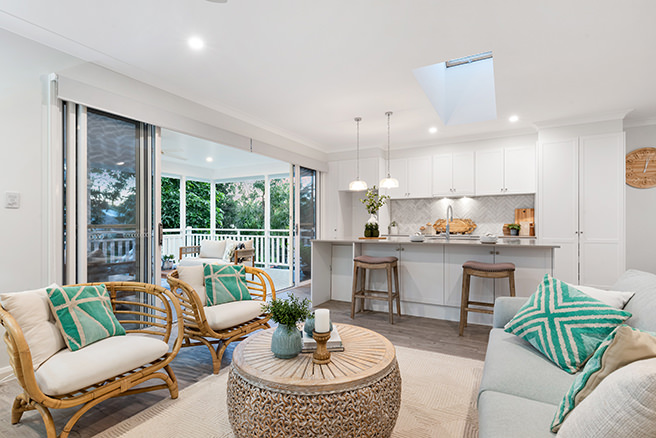
Setting clear spaces in your mind can be a huge help for getting started, but visible partitions are perhaps the most effective and attractive way to bring zoning to life. Semi-partitions as seen most commonly in restaurants and offices are perhaps the most practical option here and can include features like low-cut kitchen islands, carefully designed gas fireplaces or even straightforward, well-placed bookshelves. The ability of these partitions to segment living spaces (e.g. no more dirty pots & pans on show in the living room!) can prove especially beneficial with open-plan living, making it far easier to draw design distinctions between connection and privacy.
# 3 – Segment lighting circuits
Zoning most often refers to interior choices on the ground, but lighting also deserves a mention when it comes to open plan set-ups. Individual circuits that allow you to light each zone in turn are especially imperative for creating a more segmented living space that enables comfortable, appealing functionality wherever you need it without drawing attention to zones that you’re not using at the time. This is especially important in small spaces such as open-plan kitchen set-ups, where placing seating and cooking areas on separate circuits can create the impression of space, while easily hiding mess that will detract from eating ambience and vice versa.
Zoning is only set to become more popular over coming years as our homes continue to become more multifunctional spaces. Make sure that you’re at the forefront of this trend by taking these steps to perfect the art of interior zoning in no time.
[disclosure*]