3 home repairs to do before selling your property

3 home repairs to do before selling your property

If you’re planning on selling your home, you’ll have quite a few things to do to prepare. You’ll need to make the property as attractive as possible to potential buyers. A few, obvious improvements stand out, such as giving all the walls a fresh lick of neutral coloured paint and laying new carpet.

However, these are far from all you’ll need to do. There are many home repairs to consider carrying out before selling your home, some of which may turn out to be vital. They’ll not only make the property more attractive to viewers, but could make the property more valuable at the same time.

You’ll end up making a greater profit on the sale because of these repairs. Focus on these three specific areas.

Home repairs to do before selling your home: 3 top options

1. Plumbing

If your domestic plumbing needs a lot of remedial work, then potential home-buyers could walk away without considering putting down an offer. With the amount of use the plumbing system sees – and how expensive it could be to address any issues – it’s easy to see why buyers would steer clear.

Fixing any potential issues before listing your home for sale is vital. It should be one of the first things you look at, especially before any aesthetic improvements, such as painting.

2. Foundation

Foundations can suffer from multiple issues, and these can end up affecting the entire home if they’re left to develop further. That’s why many home-buyers focus on them when inspecting a property. Most people employ home inspectors and surveyors to make sure nothing serious is overlooked.

You’ll need to make sure there aren’t any issues for them to discover. Even seemingly minor issues such as small cracks should be investigated to ensure that there’s nothing to worry about. As small as these may be, they could become much larger with time.

Many buyers won’t want to deal with these matters, so perfect foundations typically attract a higher purchase price.

3. Flooring

A home’s floors make a significant difference in how it looks. You’ll need to look beyond the aesthetics, however, and make sure they’re not damaged in any way. That includes scratched floorboards, cracked tiles or even ones affected by water damage.

Carrying out reflooring could be a worthwhile task. While this could be more expensive or time-consuming than simply putting down a new carpet, it’ll generate more of a return on investment than you’d initially assume. Choosing a few particular flooring options – such as hardwood or real stone – could be a good option.

These materials are typically more appealing to potential buyers than others and should make you more money.

Home repairs to do before selling your home: Wrapping up

Figuring out which home repairs to carry out prior to selling your home can be tricky. You’ll not only need to worry about how much they cost, but whether they’ll make your home more appealing to potential buyers.

Your plumbing, flooring and foundation are the most notable areas to focus on, as they’re sure to give you a decent return on your investment.

[disclosure*]

7 things to check before taking possession of your new home

7 things to check before taking possession of your new home

You’ve finally found your perfect house and now it’s time to sign on the dotted line. Congratulations! But there’s still a lot of work left to do before you can call your new home officially yours. You wouldn’t like to be sitting in your new home without a great deal of focus and attention to detail, now would you? If you don’t take care of the small things, your new home could end up costing you much more in the long term. Here are the 7 most important things to check on before taking possession of your new home.

Drainage

A landscaping survey is important to assess if the original drainage system is adequate enough to support your new home. Your water drainage system should help divert rainwater from inside your home, into the soil and away from the foundation. You can get services of drain survey in London to conduct a survey in your planned house. By using CCTV, a surveyor can go through all the nooks and corners of your new home. This is to ensure that there are no blocked sewage pipes, water drainage systems or sewer lines that may be causing flooding problems.

Windows and doors

Before moving into a new home, you should consider checking the condition of all windows and doors. You wouldn’t want your home to be flooded or have small holes in the roof while you are waiting on a repairman to arrive. You should make sure that the window openers are in good condition, as well as locks and weather strips. With these items in bad condition, a burglar can simply break into your house, or the window could easily be blown open.

Appliances

You should make sure that all the appliances, including your heating system and air conditioner, are in good working order. Your heating system should be equipped with the necessary tools to help you control its functioning. You should be in a position to know when you need to replace the filters, as well as the temperature setting and heating zones. Your cooling system should have enough ventilation to adequately cool your house while maintaining a low noise level.

Utilities

Before you move into your new home, make sure that there are no leaks in your water, gas or electrical connections. You should be checking for leaks by putting food colouring into your plumbing system. Wait a few hours to see if the water has coloured. If it has, then the lines are leaking. Do not move into your new home without a repairman to check. By having a routine check, you will be able to notice any leaks and also make repairs before any damage occurs to your house.

Paintwork

You should make sure that the paint on the walls of your new home is in good condition before moving into it. If there’s cracked and flaking paint, then you should have it repaired as soon as possible. There are many techniques to paint walls. Inspect the paint on your external walls and check for visible cracks and flaking.

Flooring

The condition of the floor of your new home is critical to the long-term maintenance, in addition to its value. You should inspect the floors and joists in your new home for any defects or rot. You should also check for loose boards and protruding nails that will need to be remedied. In addition, you should use a moisture meter to detect any areas of damp.

Roof

While you’re conducting your inspection, you should check your roof for any damaged and loose tiles or slates. The roof, in addition to the walls, is a major element of the visual appeal of your home. As well as the slates, inspect the rafters, joists and fascias – especially if it’s an old building. Furthermore, look out for signs of termite infestation such as holes or nests.

By checking all these details before moving into your new home, you’ll ensure that your new home is in good condition. You’ll cut down the overall expenses of maintaining it and reduce the risk of any unexpected repair jobs. The most important thing is that, when you’re taking possession of your new home, you don’t get caught out by unforeseen costs.

[disclosure*]

What to consider when hiring a professional plumber during this pandemic

What to consider when hiring a professional plumber during this pandemiccredit

The restriction on movement and socialising isn’t relaxing. COVID-19 is still in existence, so continuing with social distancing and limiting contact with people is essential. But with all this going on, what if you have plumbing issues?

The good news is that plumbing is considered an essential service. This means that plumbers are allowed to visit your home to attend to your plumbing needs during this pandemic.

Are you at risk of infection when a plumber you know nothing of enters your home? Do you feel like neglecting to hire a plumber just to protect your health? Well, you needn’t worry unnecessarily. If you follow the guidelines in this post, you can hire a professional plumber while still protecting your and your family’s health.

Plumber illustration

Ensure your tradesperson takes the necessary precautions

Enquire of your tradesperson the precautionary measures they take to prevent the spread of COVID 19. There are a couple of precautionary actions that a professional service provider takes when going from house to house.

Firstly, they ensure that they thoroughly cleanse their hands before entering a home and after departing. They also ensure that they have sanitiser in their tool box at all times. So, check that your plumber has hand gel or sanitising wipes in their possession. Also, they must wear a face mask. Make sure of these points before allowing them into your home.

Also, once the plumber is in your property, observe their behaviour. For example, are they practising social distancing? Are they keeping at least 2 metres away from all the residents in your home?

Also, make sure you hire a professional or company that allows you to sign essential documents online; you want to avoid signing any paperwork physically.

Lastly, ask your tradesperson about their company’s illness policy. For example, a good plumbing firm ensures that its operatives stay home to report symptoms or illness. They then carry out testing on all workers that are feeling ill. This ensures that their employees are virus-free and can be allowed to visit a home and carry out their work.

Illustration of a plumber and wrench

Ensure your plumber is properly licensed and insured

Due to the pandemic, it’s essential that your trader is licensed and insured. Don’t settle for a mate with a toolbox to handle your plumbing needs. Instead, hire a professional plumber who is appropriately licensed and insured.

There are two main reasons why your plumber needs to be licensed and insured. Firstly, a licensed and insured technician is required to abide by the company’s policy. And the company’s approach during this pandemic will state the precautions that contractors need to take before working on a job. Secondly, a licensed plumber will be one with adequate skill and experience to complete a job. They’ll know how to undertake complex challenges and, as a result, they’ll complete the job quickly and successfully.

An insured contractor is essential because it protects you throughout the job process. If any damage or injury is incurred during work on your home, the plumber or their company will be held accountable. You won’t have any extra, unexpected costs due to any accident or emergency.

Illustration of a plumber using a spanner

Go online and read reviews

Reviews are essential to ascertain the competence of a service provider. They’re essentially what previous customers think of the performance of a contractor. So, ensure you view all the reviews left about any plumber you’re considering hiring.

Regardless of the pandemic, it’s always useful doing this. First, go to the plumber’s company website. Check the reviews left on the quality and delivery of service by that company.

Also, visit online platforms such as TrustPilot and Checkatrade. These websites allow you to view what customers thought about the service and workmanship of a plumber. Find out if there have been any complaints or warnings published about your potential contractor.

Do they follow the necessary precaution to avoid the spread of the COVID virus? Does the plumber adhere to their company’s policy? In other words, determine whether past clients felt safe and secure inviting the repairperson into their homes.

Illustration of a workman with helmet saluting

Referrals and recommendation

Recommendations are essential when in search of a service provider. It helps you to identify a professional that is best suited to your needs. 

Ask around. See if your neighbours or work colleagues can recommend a safe and reliable plumber. Friends and family can also be of immense help. Let them know what kind of service provider you require. Ask questions that will help you identify the best plumber for the job. Ask your recommender about the quality of work the contractor provides. Find out if they arrive to work on time and with the right tools or equipment. ascertain whether the work carried out comes with a warranty. This will give you a sense of what to expect if you hire the recommended plumber.

Check out this link https://allstarplumbing.co/ for experts who know how to provide competent services following the highest safety approach during these trying times.

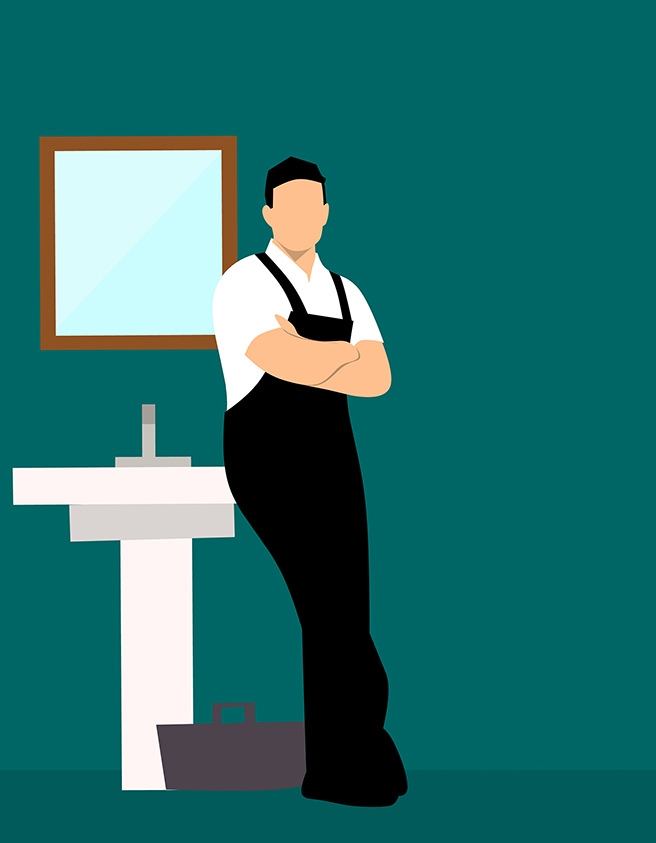
Illustration of a plumber leaning against a sink

Final note

Don’t wait for a plumbing job to become an emergency before hiring a professional. Don’t leave a minor problem unchecked, it could turn into a significant issue that can cost you a lot of money.

Due to the pandemic, you might be reluctant to call for a repairer when faced with a leaky tap or a burst pipe. This page has tips on how to perform quick fixes on a leaking pipe. If, however, it turns out to be a problem which you feel is too big or complicated for you to tackle yourself, you could turn to Sydney plumbing services.

Hopefully, we’ve helped to steer you in the right direction if you’re hiring a professional plumber in the near future.

[disclosure*]

DIY or professional: Should you repair a plumbing emergency?

DIY or professional: Should you repair a plumbing emergency?

No matter how skilled you are at DIY, there are some tasks that are best left to the professionals. Tackling a repair that’s beyond your skill level could end up with you creating an even bigger problem, resulting in you having to make an expensive (and embarrassing) call to a professional to put right your errors. Some plumbing tasks are best left to professionals. Read on to learn more about flood restoration and in what situations you shouldn’t repair a plumbing emergency yourself.

Water leak icon

Water mains repair

If your water bill seems to be going up, and you can’t see a reason why, you should inspect your water mains for a leak. A mains water pipe runs underground to bring clean, fresh water into the house. Because of their position underground, a leak in these pipes could go unnoticed for a long time. Replacing these pipes needs an expert, emergency plumbing toronto and isn’t the kind of plumbing task to tackle yourself. A professional will be able to replace or repair the pipe without causing too much of a disturbance to the rest of the house.

Gas leak icon

Gas leaks

A gas leak can be very dangerous. As soon as you think you might have a gas leak, you must turn off the gas (if you can) immediately. Call a gas safe registered plumber and leave the house. Don’t attempt to handle any repair involving gas yourself, such as Emergency Boiler Repair, as this can be very dangerous. Only a registered gas-safe professional should be called. Most plumbers will offer an emergency call-out option for problems like this.

Sewer rodding icon

Sewer rodding

Back-ups in your sewage system can cause really unhygienic living conditions. Back-ups like this are most commonly caused by a blockage somewhere along the drainage pipes or in the mainline sewer. To clear a blockage, the pipes, drains and sewer lines will need a very thorough clean. This kind of cleaning can only be done through rodding, which needs to be done by a professional. For efficient pipe service, consider reaching out to specialists at https://www.hdpe-pipework.co.uk/pipeline-contractors/.

Sewer cleaner icon

Sewer clogs

The sewer can become clogged if debris is allowed to build up in the pipes. You might discover that you have a clog if you’re experiencing an overflow of water from your taps, bath or toilet. The overflow of water can cause significant damage. To get these clogs cleared, call an experienced plumber to identify and clear the obstruction. They can also help you to put right any damage done by the water that overflowed.

Drain icon

Drain cleaning

Call a plumber to clean your drains occasionally. Periodic cleaning helps you to reduce the risk of clogged drains and the many problems that a blockage can cause. Keeping your drains in good repair is a good way to protect you from much more serious plumbing problems at a later date.

A good plumber is a very useful person to know. Any responsible home-owner should have a phone number for an experienced plumber. To find a reliable plumber, ask friends and family for a word-of-mouth recommendation, read online reviews and check that they possess the correct licences to work with gas. Never attempt major repairs yourself.

All icon credits

[disclosure*]