Home Tones: Gold

'Home Tones' blog post banner

Gold mosaic tiled bathroomcredit

This week’s Home Tones colour is gold – luxurious, pure and timeless. If you think gold walls or furniture could make a room look ostentatious, then take a look at this selection of fabulous spaces. Concerned about possibly overdoing it? Then try using the colour sparingly on things like splash-backs, door furniture, sink taps. mirrors and picture frames.

Our bathroom is definitely due a refurb. We’re really taken by the beautiful, serene mosaic tile look above. We wish we could just click our fingers and suddenly make it appear in our house!

Bedroom with double bed made with gold beddingcredit

Mezzanine with gold painted spiral staircase, chandelier and elephant figurecredit

Powder room with tall gold chest of drawers and console table being used to house a hand basincredit

Kitchen island with gold clad side panelcredit

Gold tiled cloakroomcredit

Kitchen with gold-tiled splashback, tap and cupboard door handlescredit

Black tiled shower room with gold shower head, taps and hand basincredit

Three hip ideas for new-age interior design

'Three hip ideas for new-age interior design' blog post banner

eclectic living room

The home is what you make of it. We all want to enjoy cosy and welcoming living spaces, but we don’t want to spend beaucoup of money in order to achieve said look and feel. It can be frustrating to contemplate the time and costs associated with interior design projects that are necessary or inspirational, but this doesn’t have to be the case.

We’ve put together a list of four hip interior design ideas that will add a bit of spice and style to the 21st century home. Not only are these ideas fun and fresh, but achieving them doesn’t require tons of money or time on your part.

artificial grass flooring in young person's bedroom

Artificial grass floor-coverings

We’ve seen plenty of trends in which hardwood, tile and stone floor coverings have been promoted and adopted by the latest and greatest celebrities and interior decorators. For those wanting to add a bit of feng shui to one or more rooms in the home, a different approach could be an indoor artificial grass design.

Easier to clean thoroughly than traditional carpet, highly versatile and durable to traffic, artificial grass can be selected in a variety of colours, textures and thickness. Many designs are comparable in feel to carpet, which means that the concept of artificial grass feeling like plastic is very much outdated.

Not only can artificial grass be used inside the home, but a seamless interior to exterior design plan can be incorporated in order to extend the covering outside the home.

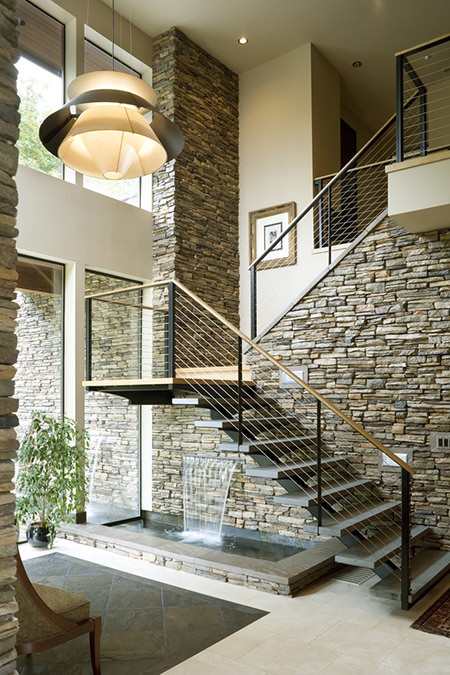
indoor water feature in a stone wall

Indoor flows of water

Bringing nature into the home doesn’t have to consist solely of children and animals tracking in mud and debris – it can also be a truly clean, organic and invigorating experience! A recent trend of indoor water flows within the home has been occurring, as more and more home-owners seek to get back in touch with Mother Nature in one way or another.

From custom glass water walls to real-life babbling brooks running throughout the home’s floors, these design elements can dramatically improve overall day-to-day mood and ambiance. While a more invasive approach is needed for some of these ideas, you may choose to opt for something as simple as a standalone fountain in the bedroom, bathroom or living areas.

And, if you’re worried this flow of water may make your home colder than you’d like it, worry not! The water can be heated to room temperature within its flow, and there’s no stopping you from installing woodburners in your rooms to help accent the theme of nature you’re planning to introduce!

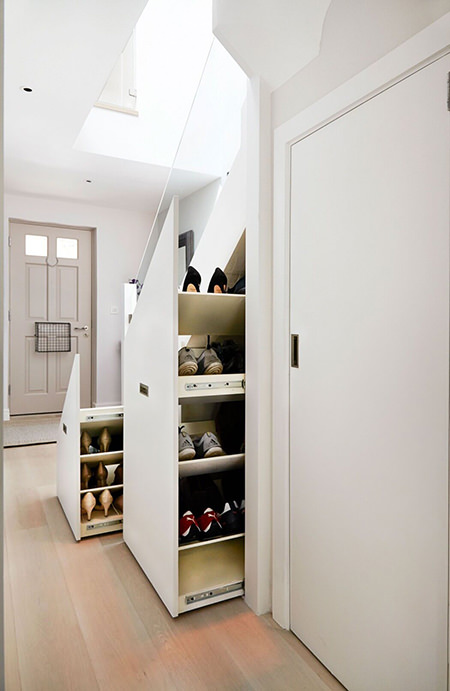
under-stair shoe storage

Abundant storage… everywhere

Most homes are designed in such a way that plenty of usable area goes unused. Walls, closets, staircases and many other areas are left to occupy space that cannot or is not used for storage and display in standard form.

Shelving, recessed areas and hidden spaces are increasingly becoming common in new interior design plans due to the need for many to make the most of smaller living spaces. Each wall presents possibilities for creative shelving situations that can be easily constructed by most, with a variety of recessed shelving kits and tutorials available via the web.

Beneath staircases and elevated floors, even more room for storage can be added with a little bit of ingenious design planning and preparation. There’s no need to be shy about where you can add a bit of storage: the answer is “everywhere”!

[disclosure*]

Home Tones: Green Flash

'Home Tones' blog post banner

cottage entrance with green flash front door

credit

Whatever happens in the fashion world filters down into the interiors world. The following is what Pantone had to say about Green Flash, one of the top 10 fashion colours they picked for spring 2016.

Green Flash calls on its wearer to explore, push the envelope and escape the mundane, radiating an openness that combines with the rest of the palette in unexpected but serendipitous ways. The popularity of this brilliant hue is representative of nature’s persistent influence even in urban environments, a trend continuing to inspire designers.

Perhaps not the easiest colour to use (nor wear for that matter), but it is very striking when successful. It’s fresh & clean so perfect for bathrooms – and also looks great near large windows where it helps bring the outdoors in. The ideal partner is a crisp, contrasting brilliant white.

modern kitchen with green flash splashbackcredit

white chest of drawers in front of a green flash painted wallcredit

Kid's bedroom with green flash painted wallcredit

kitchen diner with green flash coloured tile splashback and feature wallcredit

shower room with green flash pained and tiled walls and ceilingcredit

green flash painted porch and wooden railingscredit

bedroom bay window with green flash painted wallscredit

What’s your era?

'What's your era?' blog post banner

Eclectic sitting roomcredit

Just as it is with music and fashion, there’s no abrupt beginning and end to style in interiors at the start of a new decade. There’s always an overlapping and evolution in design and décor through the decade. The seventies is the perfect example – nature, flowers & flares in the first half of the decade, punk rock and hard-edged technology in the latter years. People don’t just throw out their furniture, pull up the carpets, paint over the wallpaper… it’s a gradual, almost imperceptible, change. Decades drift into one another other. Saying that, we’ve tried to give an essence of what each decade – the 1950s to the present day – looks like. Do you love the groovy 60s… the Scandi-inspired 90s? What’s your era?

1950s

Original 1950s sitting roomcredit

The 1950s was an exciting and creative decade with a new wave of optimism after the harsh war years. Designers could express themselves once more after rationing and glut of utilitarian products. The Mid Century Modern look was born with atomic & Sputnik styling drawing on influences from the new scientific discoveries flourishing around this era and mankind’s first ventures into space. The Festival of Britain in 1952 was a major landmark event for interiors – furniture, textiles, wallpaper and lighting all took an exciting new direction. Clean lines, bold shapes, bright colours and exciting new patterns captured the mood. Materials such as teak appeared for mass market products. Striking shades of red, yellow and blue also came to the fore.

1960s

original 1960s sitting roomcredit

The 1960s was a decade of flower power, psychedelia, peace and love. There was sexual freedom and explosion of youth culture. It was also a time of protest marches and rebellion at the established order. Space age styling really came to its peak with the space race and moon landings being a great influence. Interior designers were fascinated with the use of new processes and materials to produce exciting new versions of familiar objects – moulded plastic and inflatable chairs being perfect examples. Colour restrictions seemed to completely vanish.

1970s

original 1970s sitting roomcredit

The disco decade saw spage age influences fall away and a return to nature & self sufficiency – lots of florals, browns, beige, mossy greens and avocado – who can forget the classic coloured bathroom suites from the era! Flashes of brighter orange & yellow were used to lift these neutral schemes. There was extensive use of wood panelling, shag pile carpets, cork and hessian. Bohemian lifestyle, Biba, op art, pop art, glam rock were major influences in the first half of the decade. Later years saw the influence of punk styling and new technology – digital watches and early computer graphics, for example.

1980s

1980s study roomcredit

New wave styling continued into the 1980s. The previous decade had seen economic troubles and hardship – and these certainly continued for manufacturing industry… but the eighties is remembered as a time for new money, the city and consumerism. Home computers and mobile phones began to appear. Interiors were influenced by this rise of new technology and the fashion for power dressing perhaps. Memphis design was very influential – lots of hard edges, strong lines, zig-zags, hatching and bold colours. Stencilling, rag rolling, horizontal decorative wallpaper borders were other notable trends – and black ash furniture was everywhere! Dominant decorating shades were black, grey, pink, pastel & primary colours.

1990s

1990s IKEA interiorcredit

IKEA opened its first outlet in the UK in the late 1980s but it was in the 90s that it really began to proliferate. It’s largely responsible for this country’s ongoing love affair with Scandi cool. Its affordable flatpack furniture was a huge success – blond wood, cream & white were all the rage. It was also the era of programmes such as Changing Rooms and Home Front which really got the UK population dedicating time, money and energy to their homes… and really going DIY mad!

2000s

Vintage industrial factory conversioncredit

The clean lines and unfussy styling of the late nineties continued into this decade. The industrial styling of warehouse conversions seeped into general home décor. White and pale neutrals were the predominant colour scheme with flashes of bolder colour or pattern on feature walls.

present

Bedroom with black painted walls and brass accessoriescredit

For what will this decade be remembered? We may be biased, but we think it will be eclectic vintage – a style we love. There’s a mix of eras within one space – contemporary pieces are freely mixed with antiques. There are still strong industrial influences on home, shop and restaurant décor still, but the look has been softened somewhat. There’s a desire to make interiors individual with foraged objects, personalised homewares from indie makers and unique market finds. Dramatic dark greys are the most notable current colour scheme.

[disclosure*]