4 window cleaning hacks that will make your life easier

4 window cleaning hacks that will make your life easier

Windows are a central part of the aesthetic of every house. As such, keeping them clean is an essential part of home maintenance. However, windows are also notoriously difficult to clean, and just how long they stay clean isn’t up to you.

In this post, we’ll be looking at four tips that can help simplify your window cleaning tasks.

Sunshine coming through a window

Clean on cloudy days

Depending on the size of your home, cleaning your windows may take a couple of hours to complete. This means that you have to pay attention to the weather outside, as it can quickly ruin the exercise for you.

Sunny days may seem like a good bet, but it can quickly get very hot and uncomfortable for the person doing the cleaning. Cold, snowy days are an even worse option as the weather can make you feel unwell.

Your best option would be to clean on a cloudy, dry day when the weather is clement enough to let you carry out your work with ease. Thankfully, you only need to clean your windows once or twice a year. Finding a perfect day should be easy.

Dirty window

Always remove the dust first

Before you begin wiping down your windows with a cloth and water, you should clean the dirt hanging on your window frame. If it’s been a while since you last cleaned your windows, you can be sure there’ll be dust particles and other gunk hanging onto it. You can sweep the particles off with a brush or the dusting attachment of your vacuum cleaner.

Removing these particles can make your work remarkably easier. If left, the dirt can form into a muddy mess when mixed with a cleaning agent.

Window sill with flower pots and teapot

Clean the insides first

Choosing where to start your cleaning can be crucial to just how easy it is for you. Inside, the building is typically less dirty and can quickly be done. It’s a great way to get your task started. However, you want to minimize how much water you use to avoid it dripping on the floor.

Outside the home, on the other hand, it’s usually a lot grimier with more variety of dirt that you don’t want to get inside the house, e.g., bird droppings.

There are several window cleaning products on the market, but you can always use a home-made mixture of white vinegar and water.

Microfibre cloths

Use a microfibre cloth

When drying the windows, the choice of material can be the difference between a job well done and shoddy work. Microfibre cloths are the best option because of their absorbent quality. They’ll leave your windows dry, sparkling and smear-free.

In the absence of microfibre, some people use old newspapers to dry their windows. Generally, you should avoid using paper tissue as it can break and leave smudges on the window.

meeting room table & chairs in front of sash windows

Conclusion

Cleaning the windows of your home should be a routine exercise. Apart from improving the aesthetics of your home, it also allows for increased sunlight into your rooms. Although it’s a project that most people prefer to do by themselves, you can also outsource it. There are house cleaners in Austin and other cities that can do a top-notch job for you.

[disclosure*]

Is it a job for you or a professional?

Is it a job for you or a professional?

There are many tasks around our home that we think we can jump on and fix ourselves. However, our homes are also filled with things that can harm us if we don’t have the qualifications and learning needed to approach it sensibly. Here are some of the little jobs we can do, and others that are best left to the professionals.

Painting a blue wall red

Painting walls – you

While professional decorators will probably be able to achieve a much nicer finish, there is no reason why we can’t roll up our sleeves and grab a paintbrush to do some decorating ourselves. So long as we protect our floors and ensure that the walls have enough coats going on them to hide the old colour, painting is something that we can tackle ourselves. It can also give us a tremendous amount of satisfaction when we settle down in the completed room for the first time, as we’ll know that we helped to make it look so good!

Laying a carpet

Laying carpets – professionals

It’s actually quite rare to get a room that’s perfectly square or rectangular. There’s usually some oddity that needs to be accounted for when trying to put down a carpet. Not only does it need to fit the room, but it needs to be affixed properly to the underfloor and any underlay needs to be laid out properly too. Obviously, this is one job that is always best left to the professionals.

Changing a light bulb

Changing a light bulb – you

This job is the classic, but it is something that we can do ourselves. Even if the light is a little bit trickier to access, requiring the use of a screwdriver to actually get at the bulb, you should be able to change it yourself without any issue. Just make sure you make a note of the voltage and wattage required so you can buy the right replacement.

Fuse box

Light installation – professionals

As soon as you go anywhere near something that requires you to mess with the wiring, you need to make sure you have a professional waiting to help you out. Though rewiring a socket or putting in a whole new light fitting might seem trivial, it is always going to be much safer to let someone who is qualified handle this work to keep you as safe as possible.

Sink plug hole

Unblocking a sink – you

A blocked drain is nasty to deal with, but it is definitely something you can handle instead of a professional. This is the same for both kitchen and bathroom drains – though toilets can be a little trickier. Half the time, you should be able to unblock a drain by flushing it with hot water and potentially adding something that could dissolve the fat or grease that might be blocking it. You could also invest in a drain unblocker tool. This is always going to be a grim task, but it is one that you can mostly do on your own.

Soldering copper pipe

Burst pipe – professionals

If you have a suspicion that you have a burst pipe, this is something that has to be dealt with by professionals. Firstly, you will need to turn your water supply off at the mains – so make sure you know where your stopcock is within your home. It is usually under the kitchen sink, but it might be somewhere else. As this can be a problem that needs urgently solving, make sure you contact an emergency service. This is offered by many local plumbers throughout the country. One example can be seen through GK Plumbing in Milton Keynes who run a same day service option for people in this exact situation. They run this 24/7 so you can rely on them at any time of the day. A service like this will try to quickly send someone out before too much further damage is done to your home.

Mower on a lawn

Cutting the grass – you

It might be a task that no-one particularly enjoys doing, but there is no reason why you can’t fire up your lawnmower each weekend and cut your grass in summer. It is a quicker job than many realise, and it allows you to spend some time outside in the fresh air. If you have the free time needed to get the grass cut, you should go ahead and do it.

Felled tree

Tree surgery – professionals

Tree surgery has a lot more to it than just chopping off a few limbs of the tree. Using a licensed and qualified tree surgeon means that you can be certain that the tree is going to be coming down properly in a way that won’t harm you or cause damage to any buildings or other features around the tree. It’s always better to turn to experts such as Riverside tree care professionals for a task like this.

Obviously, all the tasks for you on the above list can also be handled by professionals. It all comes down to your personal circumstances. If you are able to complete the tasks above, you certainly can. Otherwise, you could choose to support a local business and get someone in to help you out. Either way, you can be certain that you are going to get your hands on the results you need.

[disclosure*]


A beginner’s guide to laying a laminate floor

A beginner's guide to laying a laminate floor

There are some building jobs around the house that, without the proper skill, knowledge or equipment really shouldn’t be embarked upon; major electric jobs and servicing a boiler are two such tasks.

Putting down laminate flooring can be a DIY job, even if you’re not the most experienced or confident individual. The tips in our beginner’s guide to laying a laminate floor will help you get the job done quickly, easily and with the minimum of stress and a top quality finish.

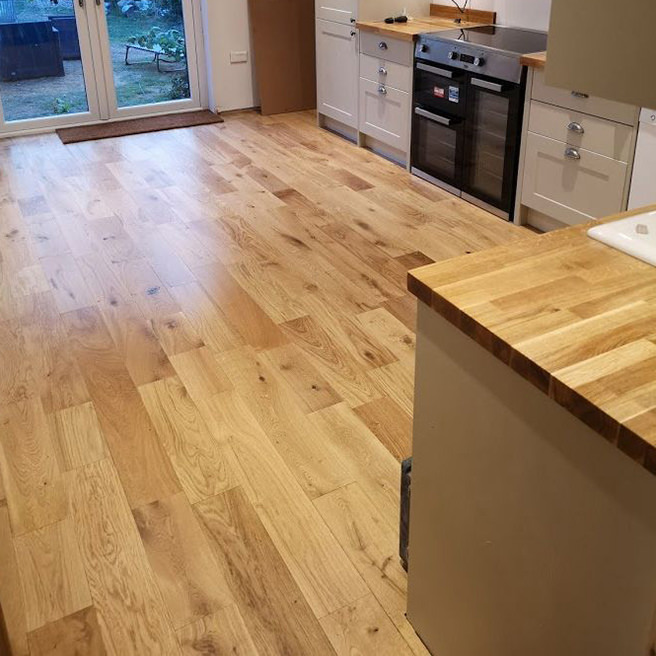
Kitchen with a laminate floor

Choose

In which room will you be laying the laminate floor? It’s suitable for almost any room except for a bathroom as it isn’t a completely waterproof option. If you’re after quality, opt for engineered wood flooring which is durable and hard-wearing as it’s manufactured using a top layer of real wood. This makes it the perfect material for heavy traffic areas such as porches and hallways. Laminate is a hygienic option as it’s easy to clean; a quick sweep or vacuum and then a going over with a damp mop. Therefore, it’s a good choice for the kitchen, laundry or children’s nursery.

Laminate flooring is available in click lok or tongue & groove boards which simplifies the fitting process. It’s available in a huge array of wood finishes with attractive natural knots and graining. Depending on your décor, you could choose rustic oak, sleek American black walnut or natural maple.

Person doing woodwork

Measure

As the old adage goes, ‘Measure twice, cut once’. You don’t want to waste time, money and materials by cutting the boards too short or at the wrong angle. Saying that, it’s always best to order a little more than you think you actually need in case things go a bit wrong.

Click lok planks of laminate flooring

Cut

Once your chosen flooring has been delivered, give it at least 24 hours indoors to allow it to acclimatise (preferably inside the room in which it’s to be laid) before you begin cutting it. The wood will expand or contract and adjust to the temperature and humidity of your home.

Ensure you have the necessary tools to hand before you begin the job. A workmate bench will make the task a lot easier – especially if you’re working on your own. You’ll need a hand hacksaw or electric jigsaw to cut the boards quickly, cleanly and precisely. Also, a hammer and small block of wood to gently tap and close any gaps between the boards as they’re being laid. You’ll need a few spacers to put between the wall and planks. This ensures a uniform gap around the edges which allows the floor a little give to expand in hot or humid conditions.

Also, although not absolutely necessary, some people like to glue the edges of laminate flooring to prevent movement. Finally, a mitre box would be useful for making angled cuts for boards that will be positioned in the corners.

Joins in laminate floor planks

Lay

Before you begin laying, ensure you’ve swept or vacuumed the base that the laminate will be laid upon and that it’s completely dry.

If the base is made of levelled concrete or ceramic tile, ensure you put a layer of plastic sheeting between it and the laminate to act as a waterproof membrane. If the base consists of wooden floorboards, make sure the boards are nailed in securely and lay underlay on top of it before the laminate goes down. Laminate is also suitable for laying over underfloor heating and even carpet, so long as the surface is even.

It’s favourable to lay the laminate boards so that the long sides are parallel to the lengthiest wall in the room. Also, stagger the position of boards to ensure their edges don’t all line up uniformly. This is for strength as well as attractiveness.

Laminate flooring in a hallway entrance

Finish

For a professional, high-quality finish along the edges of walls and over door thresholds, it’s recommended that you lay skirting boards, beading, trims and/or cover strips.

Once the flooring job is complete, we recommend that you refrain from walking on it for 24 hours as it may affect the evenness of the surface.

[disclosure*]

The best type of front door for your home

The best type of front door for your home

Looking to refresh your front door? There’s a variety of different styles and materials available on the market today. What will work best for you depends on your budget and needs. It’s also important to consider not only style, but also insulation and security – especially when it comes to the main point of entry to your home.

Let’s not forget about durability. As we’ll find out below, certain types of doors hold up better over time and use, making for a wiser investment in the long run. If energy efficiency is a concern, then you’ll need to think about whether the material can adequately keep cold air out during the winter.

Let’s make it easier to choose the right option by looking at the various types of front doors that you can buy today.

Wooden front door

Wood

  • Great durability with enough care
  • Great efficiency (worsens over time)
  • Medium to high maintenance

The traditional choice, wood doors are typically made out of pine, oak, maple or mahogany. A potential advantage is that they can be personalised to include ornaments and decorative accents, as well as glass elements. Keep in mind that wood doors tend to be on the expensive side and require regular maintenance.

The latter is due to the fact that the material is prone to rotting and fading. Opting for a solid-core wooden veneer will help to reduce the amount of decay.

Locking a UPVC front door

PVC

  • Good durability
  • Excellent efficiency
  • Low maintenance

The new kid on the block, PVC doors are becoming increasingly popular thanks to their lightweight, energy-efficient designs. The material is also relatively cheap and doesn’t rust, not to mention being recyclable. The best doors in this category are uPVC. They’re the most durable and least flexible type, so they’re less prone to warping.

To see what’s available, take a look at the range of uPVC external doors at Hardings Windows and Doors who have over 30 years of experience in the UPVC trade. You can learn more about their external doors here and the benefits they offer to see if they align with your needs. Their experts will also be able to provide you with a free, no-obligation quote for the front door of your choice.

Glass front door

Glass

  • Average durability
  • Poor efficiency
  • Low maintenance

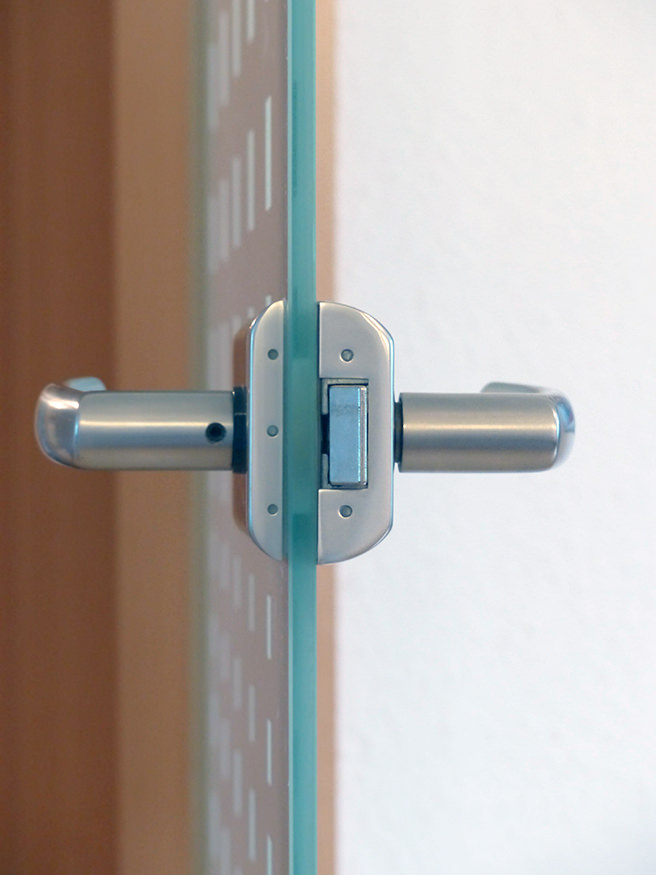
Glass makes for one of the most attractive modern front door styles on the market. That is if you don’t mind people being able to see into your home. They’re better suited for warmer climates (and safer areas) as glass tends to be a poor insulator. One advantage is that glass requires virtually no maintenance other than some occasional cleaning.

Blue metal door

Aluminium

  • Great durability
  • Decent efficiency
  • Low maintenance

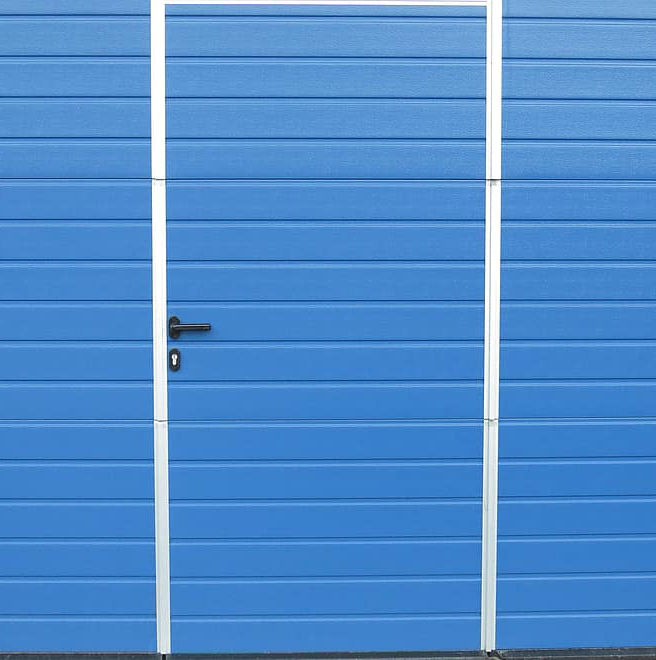
A great option for contemporary homes, aluminium is highly durable and surprisingly resistant to moisture. One disadvantage is the fact that it’s prone to water stains, which can become unsightly over time. It’s also worth noting that aluminium doesn’t offer the best amount of insulation.

That said, it’s a relatively affordable option that will outlast most other door types, making it suitable for external use. If you have a higher budget, consider a steel door as a more stylish and energy-efficient alternative.

Blue front door

Composite

  • Great durability
  • Excellent efficiency
  • Low maintenance

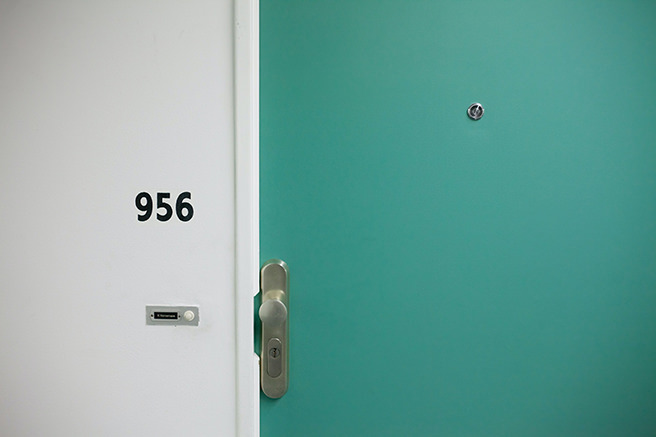
This material type refers to a combination of the above-mentioned materials. Composite doors can incorporate glass, wood, PVC, and insulated foam elements. Choose the right one and you can have yourself a highly durable and efficient front door. Of course, this does come at a higher cost than other options and there are fewer styles on offer.

Be sure to consider the way your home is set up when choosing a front door. Safety and durability are just as important as aesthetics, and going for something more efficient can save you a pretty penny in energy bills as time passes.

[disclosure*]