There are many things to consider when choosing flooring for your home. The type of room and its use is the first and most obvious factor. What look or atmosphere are you trying to create? How durable does it need to be? What’s your budget? These are important initial questions. But perhaps you’re also concerned about using natural and or sustainable/environmentally friendly products. Perhaps someone in your household suffers from allergies, some floor coverings are more suitable than others. There are lots of products available on the market to fit all criteria.
Sitting room / dining room / lounge
In houses nowadays, the sitting room, dining room and lounge areas are often designed to be open plan. This means that the flooring is often the same throughout, giving a seamless flow to the space. These areas form the main living spaces of the house so flooring should have a sense of warmth.
Soft surfaces such as carpet spring to mind. It provides the desired comfort and warmth – and is available in an endless array of colours and pattern to suit any decorating scheme. There’s also the option of seagrass, coir, sisal, jute and water hyacinth for a natural look and feel.
For this there is a perfect laminated solution that’s been available for decades. There is choice of laminate flooring for all rooms with an increasing range of designs available than any other floor. This material has been continually developing and now offers great flexibility in terms of colour, finishes and price range. It’s very durable too, so great for families or pet owners. With its click groove design, it’s relatively easy to install – whether by a professional fitter or DIY enthusiast.
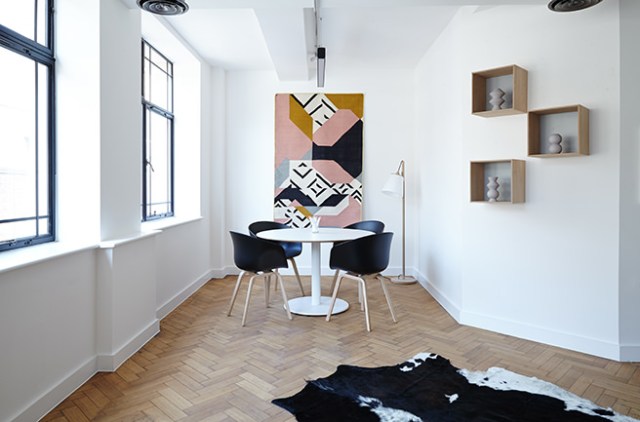
You might also be lucky enough to find some parquet or lovely old floorboards under a battered, dated carpet. New wood or reclaimed boards could also be installed. These can be buffed, sanded, stained or painted.
Or how about coconut timber? Coconut palm wood is made from matured (60-80 years old) coconut trees that no longer bear fruit – looks great and environmentally friendly too!
Bamboo is another flooring material gaining in popularity. As it’s a quick-growing grass, not a true wood, it is sustainable product.
To soften these harder surfaces or define spaces, lay rugs to break up the expanse of laminate or wood. For safety reasons, ensure that they wont move or slide with non-slip backings, clips or tacks.
credit
Porch / hallway
The part of the house that receives the heaviest traffic in most houses. The flooring material must be durable and easy to clean. Again, you could consider laminate or wood products. Or perhaps stone or ceramic in this area. A patterned surface such as encaustic tile is ideal as dirt doesn’t stand out as easily as it would on a plain floor. It’s also often the first room you enter, so making a statement is no bad thing!
Kitchen
The kitchen isn’t called the heart of the home for nothing. In many homes, it’s a gathering space – the place where we meet, chat, cook and eat.
Durability and hygiene are key. There are food spills, dirty foot and paw prints to contend with – so cleaning it needs to be a straightforward operation. Again we’d highlight laminate and wood as possible choices.
Natural stones such as limestone, slate or marble are good options for this area too. Also ceramic tiles and composite stone such as terrazzo. If you’re going for naturally cold materials such as stone or ceramic, consider the benefits of underfloor heating being installed at an early stage of the design process.
Vinyl tiles are a very affordable option. They are easy to lay, easy to keep clean, waterproof and are very hard wearing. The range of prints available do a good job of imitating other products such as ceramic tile, stone and wooden floorboards – at a fraction of the cost.
Linoleum has seen a resurgence in recent years. It’s manufactured from flax seeds combined with other natural plant materials. It is an anti-static and hypo-allergenic compound making it a good flooring choice in homes where people have health issues such as asthma or allergies. It’s available in a range of colours which don’t fade and is fire-resistant which is a great safety advantage for kitchen spaces where blazes can start.
Perhaps you like an industrial feel kitchen. You could use reclaimed materials – or introduce materials more normally associated with factory or workplace environments like polished cast concrete, steel or rubber.
credit
Bathroom / cloakroom
The first and most important consideration – is it waterproof? Who wants soggy, rotting carpets?!!
Fortunately, there are some excellent waterproof options available. We can sing the praises of laminate flooring here again. It also has the feel of cleanliness that many people like in this area – and even though the material is in itself man-made, the various natural colourways lend themselves to natural decorating schemes that are popular in this room.
You could also opt for painted floorboards in this area which in addition to being waterproof, also allows the introduction of any colour of the rainbow.
Rubber and vinyl are also great choices which can be laid as tiles or sheets. They’re both waterproof and warm underfoot. No shortage of colour or pattern choices here either. Styrene-butadiene (synthetic) rubber is resistant to fading and burning. Just the thing if you’re prone to knocking over your relaxing bath-side candles!
Or how about cork? Natural, fire repellent, noise deadening, non-allergenic, waterproof, warm and soft. It’s eco-friendly too as the material is renewable – harvested every few years from the trunk without actually harming the tree.
credit
Bedroom
The obvious choice for bedrooms is carpet. It’s soft and warm underfoot – perfect as you relax at night or take those first footsteps of the day!
As with the lounge carpets, you’ve also got all the similar flooring products made from natural materials such as seagrass listed previously.
You could add a touch of opulence to your bedroom by laying leather tiles. Leather is luxurious and warm underfoot – and looks fabulous. However it can be quite expensive – and best for small areas of light traffic.
Stairs / landing / corridors
These are other areas of a house that get quite a lot of footfall. The action of going up and down a flight of stairs can be loud especially if the treads are bare wood or concrete. If you live in a flat with other flats above or if you live in a multi-storey house you can often hear people moving about above your head. It could range from softly creaking floorboards to kids sprinting up and down. Laying carpet greatly reduces the noise and can introduce attractive pattern and colour to an often overlooked area.
These connecting spaces might also allow the introduction of toughened glass panels which allows natural light to pass through into other rooms above or below.
Outdoors – Garage, patio, balcony, deck
Obviously, this flooring has to be weather resistant. If your garden gets quite a lot of shade, you need a surface that discourages the growth of moss and mould – or one that it can be cleaned off easily.
Wooden decking is a popular choice for many – maintenance requirements will depend on the type of wood. There are also some ‘wood look’ composites and plastics available. These have the benefit of not requiring further attention once fitted and generally have very long lifespans.
Stone tiles are also an option. These natural material really suits the garden environment. You also have the option of carrying the same flooring out into the garden from the kitchen, lounge or conservatory areas. This gives a wonderful flow and helps bring the outdoors inside.
[disclosure*]