Best kitchen renovation tips & ideas

'Best kitchen renovation tips & ideas' blog post banner

vintage industrial kitchen

Renovating your kitchen will add to the overall appeal, saleability and value of your home. And of course, it will add to your daily enjoyment of life. You’ll surely be more inspired to cook and prepare sumptuous meals for your family in an upgraded, more beautiful kitchen. You’ll feel much happier inviting guests and friends into the space. And, if you’re the type of person who loves spending time in the kitchen, what better undertaking than developing the perfect space to suit your needs?

Here are some helpful kitchen renovation tips & ideas:
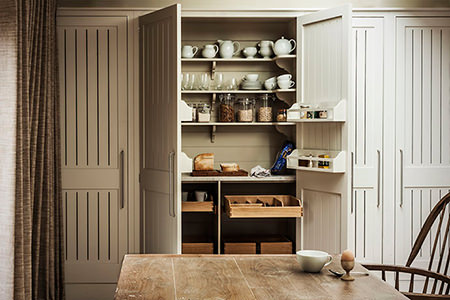
built in kitchen pantry

Use high quality materials

A good foundation is essential, so it’s advisable to pick high quality materials for use in your renovation. There are lots of areas to consider – flooring, worktops, sinks, splash-backs and cabinets. Choose work surfaces that combine beauty with durability, floors that are practical and easy to clean and good quality drawers that slide smoothly.
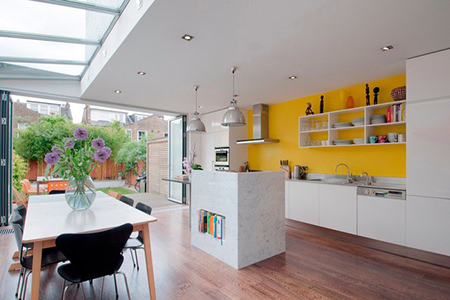
open plan kitchen diner with bright yellow feature wall

Wall colour

The colour of the walls will dictate the overall atmosphere in the room. Choose a colour that will create the mood you’re seeking. Some people prefer white to make the room look clean and bright. But you may also want to use less stark neutrals such as creams or natural wood tones. Bold, bright colours can also work well – perhaps on a feature wall. Accessories such as kettles, pots & pans, textiles and storage jars can then pick up on these colours.
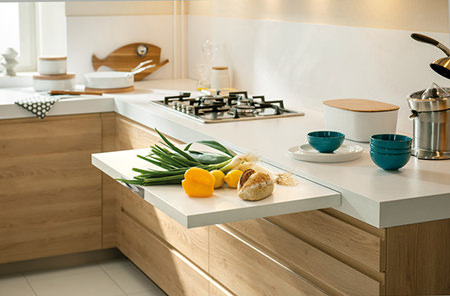
Kitchen countertop extension chopping board

Counter-tops

As mentioned, quality is very important. So when it comes to a large expanse of counter-top, consider your materials carefully. There are many options – granite, marble, limestone and natural woods will all add to the feel of quality and permanence.
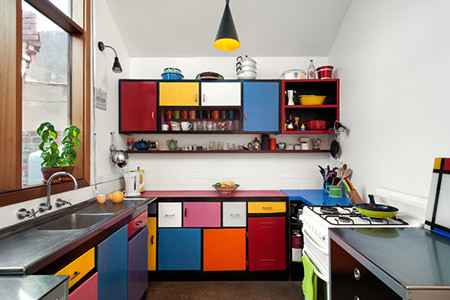
Colour block kitchen cabinet doors

Kitchen cabinet design

Kitchen cabinets play a very important role in the overall appearance and functionality of the kitchen. It’s one of the first things that you will notice when you go to the kitchen, so make sure you’ve chosen a good design and appropriate style. Install as many cabinets into the kitchen as space allows without feeling claustrophobic. You can never have too much storage space in a kitchen.

If you already have plenty of cabinets, and they’re in good condition, you can have professionals like those at Kitchen Makeovers upgrade the doors and hardware and leave the carcasses in place – this will save you money and disruption.
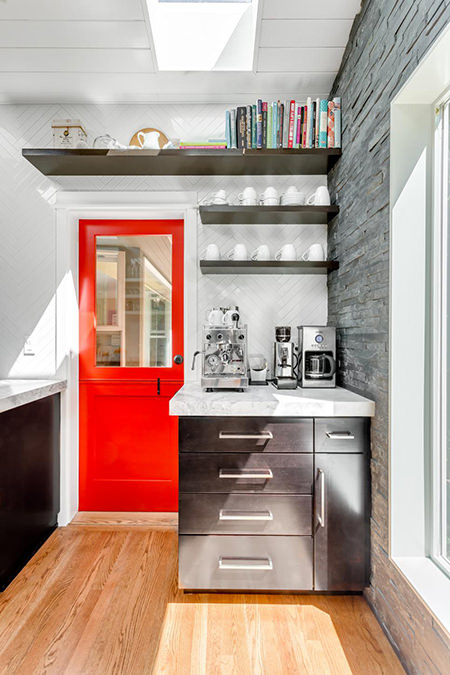
Fire engine red door leading out of a kitchen

Dress up the door

If you’re going to revamp your kitchen, then you might as well go all the way and include its entrance in the makeover. Doors are often overlooked – and stand out as an incongruous and rather ugly expanse of wood or PVC in the corner. Perhaps move away from the standard off-the-shelf door. Add character by painting it with fun highlight colours that compliment the rest of the décor. Glass panels will allow light to pour in if darkness is an issue. Be creative – don’t be afraid to come up with unique ideas or solutions.
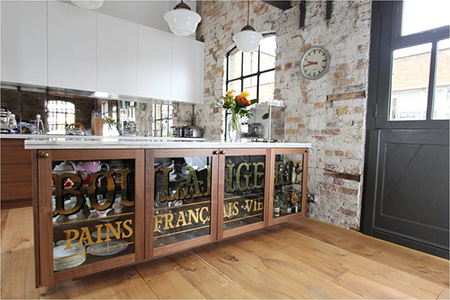
Vintage industrial kitchen

Don’t overdo it

Decorating is fun but avoid overdoing it. When your kitchen starts looking too busy or crowded, then you’ve probably gone too far. The kitchen needs to be practical as well as beautiful. Furnish and decorate according to the space available. Stick to the essentials in terms of appliances on view and provide yourself with plenty of storage. Remember, simplicity is beauty.

Grey open plan kitchen with island

Finishing touches

Complete the new look of your kitchen with fresh flowers, artwork and, of course, some elegant tableware. Shop for the most beautiful and unique dinner set from Harris Scarfe. They have a wide range of designs and styles to suit any kitchen or dining space. The perfect addition to your new and upgraded kitchen!

[disclosure*]

10 common underfloor heating questions answered

'10 common underfloor heating questions answered' blog post banner

lounge area with poured resin floor with underfloor heating

Image credit: Resin Floors North East

Underfloor heating can leave many people puzzled when it comes to ascertaining how they work and how they can benefit those who have them installed. Here we’ve taken the 10 most common questions concerning underfloor heating and provided the answers:

'How Underfloor Heating Works' diagram

  1. What are my options when it comes to underfloor heating?

There are two types of underfloor heating available, electric and wet. Electric underfloor heating consists of heat mats, packed with electric wires, that warm up once connected to the mains electric supply and thermostat.

barn conversion loft bedroom with wood floor and underfloor heatingImage credit: William Beard Flooring

Wet underfloor heating utilises plastic pipes under the floor that heat up using warm water from the central heating system.

L-shaped sofa in front of a fire with Indian stone tiles with underfloor heatingImage credit: Llama Developments

Many common questions come down to system type, as wet and electric underfloor heating behave quite differently in terms of heat output, installation depth and running costs. Understanding the differences between systems can help avoid mismatched expectations and ensure the right solution is specified for the space.

  1. Where can I buy underfloor heating?

Your local DIY store probably stocks underfloor heating kits that you can pick up off the shelf, but we recommend that you speak to an expert, such as The Underfloor Heating Store and visit their showroom to witness the benefits of such a system for yourself.

kitchen underfloor heating

  1. How much does underfloor heating cost to install?

Prices vary depending on whether you opt for an electric or a wet system, but you can buy electric heat mat kits from £74.99 or a wet underfloor kit from £239.99. Then there’s the cost of installation, tools and labour for electricians and plumbers: put aside £400 as a starting point.

Tiled floor with underfloor heating in a bathroomImage credit: VIP Plumbing & Heating

  1. How much does underfloor heating cost to run?

This varies on the size of the room and the system used, but you are looking at an average cost of £248 per year, based on 25m underfloor heating running for four hours every day for a year.

Bedrom with grey walls, tall feature window and wooden floor with underfloor heatingImage credit: Architecture Live

  1. Which underfloor heating system is best?

Both systems can heat the room to the same temperature. However, bear in mind that a wet system is cheaper to run than an electric even though it requires more work to install.

Wet systems are also more energy efficient, a traditional central heating system requires the water it uses to be heated to 80°C, whereas an underfloor heating system requires just 45°-60°C and will still heat a room to a comfortable 21°C, with no cold spots. This will save you money in the long run and reduce your carbon footprint.

Grey and yellow kitchen-diner with underfloor heating Image credit: Avocado Sweets

  1. How long does underfloor heating take to warm up?

This all depends on the thickness of the floor, the insulation you lay down and how well insulated the room itself is. The general consensus estimates that it takes around 30 minutes to heat a wooden floor but can take a few hours with an un-insulated, concrete floor.

kitchen with vintage industrial stools on a grey rubber floor with underfloor heatingImage credit: Chris Dyson

  1. Can I install underfloor heating myself?

Anyone can install underfloor heating and treat it much like any DIY project. You will, however, require a qualified electrician or plumber to connect your system to the mains electricity or central heating system.

open plan, white-washed, light-filled lounge with wooden floorImage credit: The Bazeley Partnership

  1. What size of kit do I need for my room?

The Underfloor Heating Store recommends that you buy an underfloor heating kit that covers between 80-85% of the free floor space in the room to reduce the occurrence of cold spots. It is also important that you do not order too much if you are using rolled heating mats because you cannot simply cut the cables.

large kitchen with central island and polished tiled floor with underfloor heatingImage credit: DDWH Architects

  1. What floors can underfloor heating be used with?

You can install underfloor heating beneath most flooring solutions, tiles, vinyl, laminate and even carpet can all be laid over underfloor heating, just bear in mind that better insulation is required for thicker floors.

Cream fitted kitchen with tiled floor and underfloor heatingImage credit: P & P Maintenance Services

  1. Can I put furniture on top of underfloor heating?

Most free-standing furniture is fine to place on top of an underfloor heating system. Just be careful when placing items such as thick rugs or dog beds in the room because they can trap heat and cause issues.

Now you know the answers to the most commonly asked questions, it’s time to get your very own kit laid in the conservatory, in the kitchen or even the bedroom and enjoy toasty floors underfoot!

[disclosure*]


Cupboard love

'Cupboard love' blog post banner

detail of vintage contents of renovated 1960s wood & Formica kitchen cabinet
This vintage 1950s kitchen cupboard / kitchenette has been this week’s little renovation project.

vintage 1960s kitchen cabinet prior to renovation detail of 1960s kitchen cabinet prior to renovation

detail of top of 1960s kitchen cabinet prior to renovation

We collected it from a garage over in Wakefield and set about giving it a bit of TLC.

First of all, it got given a good wash inside & out with hot, soapy water. The original red Formica laminate was very faded and mottled, so we repainted it in a lovely vintage spearmint green colour. If you’re uncertain about what colour you want you can buy little tester pots. You can even get colours specially matched at many local DIY shops.

view of fully renovated 1960s wood & Formica kitchen cabinet when empty

We lined the shelves with a chintzy oil cloth that we bought online.

vintage 1960s wood & Formica kitchen fully renovated and stocked with vintage kitchen items and put for sale on the H is for Home pitch at Picture House Antiques in Todmorden

It’s now standing in our Picture House Antiques pitch waiting for someone to come along and give it a new home – in the meantime, it’s great for displaying our kitchenalia shop stock.